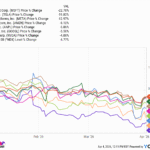
In a surprising turn of events, Bitcoin concluded March with a modest gain of 1.8%, breaking a five-month streak of price declines that had many investors anxious about the digital asset’s future. This notable shift prevented what would have been its first six-month losing streak since the historic downturn experienced from August 2018 to January 2019, which was followed by a remarkable recovery that saw Bitcoin soar over 200% within just a few months.
From October 2025 to February 2026, Bitcoin’s price plummeted approximately 45% from its all-time high of nearly $126,000. While this kind of drawdown isn’t unprecedented in Bitcoin’s history—having previously dropped as much as 80% before rebounding—it still marks a significant hardship for holders.
During the previous bear market of 2018-2019, the digital currency experienced a similar pressure, subsequently climbing from around $3,400 in February 2019 to over $13,000 by June of that year. Though the current situation differs—halting at five months of declines—it evokes hopes for another strong recovery, contingent upon market dynamics.
Currently, Bitcoin’s price hovers around $72,459, with a market capitalization of approximately $1.5 trillion. The asset’s current trading range falls between $70,522 and $72,495, and over the past year, it has fluctuated between $60,255.56 and $126,079.89, reflecting the volatility synonymous with cryptocurrency markets.
Despite the recent rebound, challenges loom large. Unlike the preceding recovery period which unfolded during a relatively stable economic environment, the present market is marked by geopolitical tensions, particularly the ongoing conflict in Iran that has kept oil prices elevated and added uncertainty to economic forecasts. This, coupled with an ambiguous trajectory for Federal Reserve interest rates—a factor usually favorable for risk assets such as cryptocurrencies—presents a complex landscape for investors.
Yet Bitcoin has demonstrated a remarkable resilience amid these tumultuous conditions, maintaining a trading range even as external pressures amplified. Historically, conflicts tend to subside, and disruptions eventually ease, leading to a cautious optimism for long-term holders of Bitcoin. For investors with a horizon extending beyond five years, the potential for recovery remains beckoning, encouraging a strategy of accumulation within a diversified investment portfolio.
Should Bitcoin embark on a substantial rally from its recent lows, it could represent a significant windfall for those strategically positioned, turning any investment into a much sweeter return. For now, the cryptocurrency community watches keenly, hopeful for the turning of tides in favor of the digital currency.