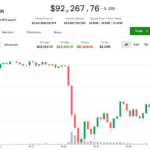
Bitcoin has recently diverged from its historical correlation with the Nasdaq 100, marking a significant shift in its behavior as an asset class. As the tech-heavy Nasdaq has gained momentum through October and November, buoyed by strong earnings from key companies known as the “Magnificent 7,” Bitcoin has seen a notable decline. The cryptocurrency dropped from a peak of $126,000 to approximately $86,000, representing a decline of over 30% from last month’s highs.
This divergence, which began in early October 2025 and has intensified throughout November, raises critical questions for investors. Is this separation a fleeting anomaly, or does it indicate Bitcoin’s emergence as an independent asset class?
Historically, Bitcoin was often perceived as a high-beta asset relative to the Nasdaq, amplifying its movements in both up and down markets. During risk-off periods, both asset classes tended to decline together, while they experienced rallies in tandem when investor confidence returned. This relationship was logical, given that both Bitcoin and high-growth tech stocks attracted speculative capital, benefiting from loose monetary policies and suffering during times of Fed tightening.
The distinction started to emerge following a significant flash crash on October 10, 2025. In this event, the cryptocurrency market was hit hard due to a cascade of forced liquidations linked to leveraged long positions, resulting in a sharp decline for Bitcoin while the Nasdaq remained largely unaffected. This incident underscored the contrasting nature of the two markets: Bitcoin’s decentralized and globally liquid structure led it to react violently to crypto-specific pressures, whereas traditional equities remained stable.
Several factors unique to the crypto market may have continued to weigh down Bitcoin even as the Nasdaq surged. Notably, U.S. Bitcoin exchange-traded funds (ETFs) experienced net outflows totaling $3.5 billion in November alone, approaching a record from February. The largest Bitcoin ETF, managed by BlackRock, saw $2.2 billion in redemptions, the biggest since its inception. Moreover, profit-taking behavior among long-term holders post-halving has contributed to sustained selling pressure, independent of broader market trends.
Additionally, institutional capital appears to be diverting to high-performing mega-cap tech stocks, benefitting from artificial intelligence demands and robust earnings reports. This capital flight has exerted downward pressure on Bitcoin even as the Nasdaq has gained ground.
Macroeconomic conditions also play a role. As the Federal Reserve has adopted a more hawkish stance, warning that a rate cut in December is not guaranteed, risk assets like Bitcoin typically bear the brunt.
The complexities surrounding the cryptocurrency market are compounded by a potential reclassification of Strategy, a large Bitcoin holding company, by MSCI. This reclassification could trigger forced selling, further impacting both Bitcoin and the firm’s stock.
Additionally, a crisis in Japan’s bond market is exerting strain on global liquidity, forcing Japanese institutions to pull capital from international markets, including U.S. equities and cryptocurrencies. This withdrawal has implications for both Bitcoin and the Nasdaq, as a broader liquidity crisis could result in widespread asset liquidations.
The impending change in Federal Reserve leadership adds another layer of unpredictability to Bitcoin’s future. With Chair Jerome Powell’s term set to expire in May 2026, speculation is rampant regarding his successor. President Trump is expected to announce the new appointee soon, creating potential market shifts based on the incoming chair’s monetary policy stance.
Some analysts believe the divergence between Bitcoin and the Nasdaq may reflect a transformation in Bitcoin’s market behavior. While historical trends suggest that Bitcoin’s correlation with tech equities could reassert itself during periods of market stress, the recent decline in Bitcoin appears driven by unique cryptocurrency factors.
As Bitcoin continues to face pressure—stemming from ETF outflows, the challenges tied to Strategy, and global liquidity withdrawal—investors remain divided on the asset’s future. On one hand, potential monetary stimulus measures from Japan, plans for direct payments in the U.S., and other supportive monetary policies could create a conducive environment for recovery. However, whether this recovery will hinge on Bitcoin’s performance independently of the Nasdaq remains to be seen.
For investors navigating this uncertain landscape, the broken correlation with Nasdaq signals both risk and opportunity. The traditional predictability of Bitcoin may have diminished, but this independence could allow it to recover even if conventional markets fail to rebound, particularly as concerns surrounding government debt sustainability grow.