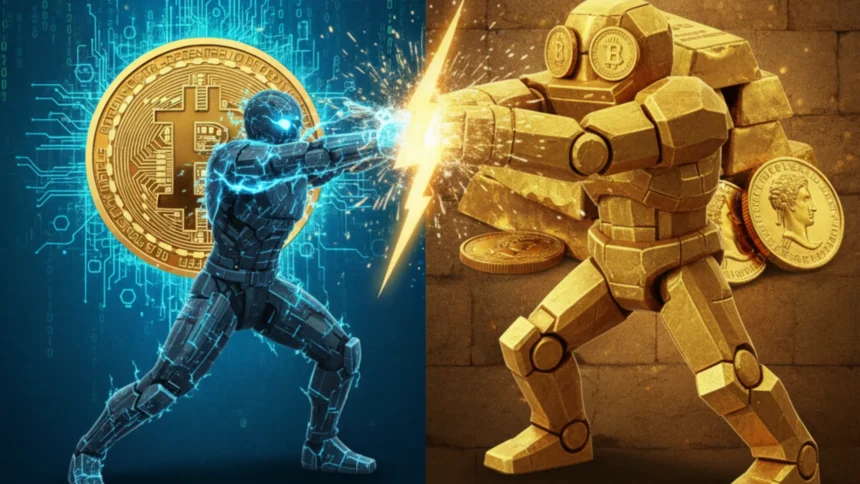
A new proposal has thrown the Bitcoin community into a heated debate, highlighting a significant ideological divide reminiscent of past controversies, particularly surrounding the introduction of Ordinals. The proposal, known as Bitcoin Improvement Proposal 444 (BIP-444), seeks to implement a temporary soft fork that would restrict the storage of non-financial data in Bitcoin transactions for one year.
Bitcoin has been lauded for its immutability and is often seen as a steadfast system that resists changes to its code. This latest proposal, attributed to an anonymous developer named Dathon Ohm, aims to counteract the effects of a recent update in Bitcoin Core v30, which lifted an 83-byte cap on OP_RETURN outputs. This previous change allowed for more extensive data storage within transactions, enabling a surge of non-financial data—ranging from non-fungible tokens (NFTs) to other extraneous content—that some believe dilutes Bitcoin’s core purpose.
Proponents of BIP-444 argue that the unrestricted data uploads threaten the network’s integrity and could encumber it with illegal or copyrighted content. They contend that this could lead to serious legal challenges for node operators, who may find themselves caught in precarious and legally ambiguous situations. Supporters claim that to preserve Bitcoin as a financial network rather than an expansive data repository, the temporary restrictions proposed in BIP-444 are necessary. Analyst Checkmatey encapsulated this view, asserting that protecting Bitcoin’s monetary function could unlock a significant asset class potential.
On the opposing side, critics vehemently oppose the proposal, framing it as a step toward censorship. Developer Peter Todd highlighted the potential for circumvention of the proposal’s intentions, showcasing that the proposal could be bypassed by embedding its text into valid transactions. There are concerns that enforcing subjective definitions of what constitutes “non-financial data” could transform node operators into de facto compliance officers, thereby undermining Bitcoin’s fundamental permissionless design. Furthermore, BitMEX Research cautioned that malicious actors could exploit the restrictions by intentionally embedding illegal content to instigate chain splits or reorganizations.
At its essence, the debate surrounding BIP-444 transcends technical modifications; it delves into the very philosophy of Bitcoin. Veteran developer Luke Dashjr argues that Bitcoin’s primary mission should be to function as sound money and not devolve into a decentralized data storage service. Conversely, many community members perceive the ability to experiment—through inscriptions and similar innovations—as key to Bitcoin’s resilience and evolution.
As of late October, BIP-444 has yet to be formally proposed to Bitcoin’s broader developer community, but discussions on platforms like GitHub and X are intensifying. This disagreement represents a fundamental inquiry into what Bitcoin’s identity should be moving forward: Should it remain a pure monetary network, or embrace a broader, more inclusive role as a decentralized database? The path toward consensus is likely to be as turbulent as the debates that have shaped Bitcoin’s history.