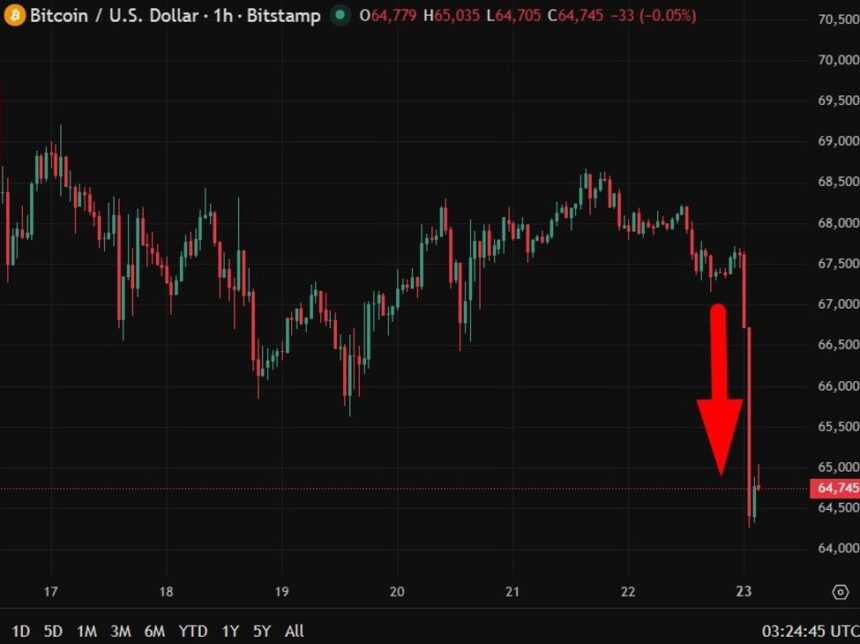
Bitcoin experienced a significant decline recently, dropping approximately 5% and falling below the crucial US$65,000 threshold. This downward movement was characterized by a rapid wave of selling, largely driven by technical factors rather than any specific news event or regulatory change.
The US$65,000 level had been a key support zone, underpinned by a period of sideways consolidation. However, once this threshold was breached, it triggered a cascade of stop-loss orders and short-selling activity. This kind of technical breakdown often leads to a feedback loop in crypto markets, where liquidity diminishes quickly, resulting in accelerated price movements due to clustered trading positions.
The inflow of bitcoins to exchanges has reportedly increased, indicating that larger holders, often referred to as “whales,” may be distributing their assets. This trend contrasts sharply with the previous weeks, during which accumulation patterns had supported price stability. The heightened activity from these larger market players can significantly influence supply dynamics, further compounding the selling pressure already present.
In addition to technical mechanics, macroeconomic concerns have also played a role in dampening investor sentiment. Renewed uncertainty surrounding U.S. tariff policies and ongoing geopolitical tensions are contributing to a more cautious global risk environment. In such scenarios, cryptocurrencies typically react as high-beta risk assets, making them susceptible to sell-offs. Furthermore, with rising volatility in equity markets and oil prices reacting sensitively to geopolitical events, there is a palpable sense of caution that has permeated across various asset classes, including digital currencies.
It is noteworthy that this drop has not been tied to any individual regulatory shock, major exchange failure, or systemic crisis within the cryptocurrency space. Instead, the decline appears to be a technical reaction exacerbated by broader economic unease and shifts in market positions.
Moving forward, traders are closely monitoring whether Bitcoin will stabilize below the US$65,000 mark or make a swift attempt to reclaim that level. Should it fail to recover, attention will turn to lower support zones, while a rapid rebound may indicate that the recent decline was merely a positioning adjustment rather than a sign of a more profound trend shift in the market.