Cryptocurrency investors are currently grappling with significant uncertainties as Bitcoin trades below $66,000, having declined over 3% in the past 24 hours and approximately 45% from its all-time high in October. The market has traversed through an extended bear phase lasting almost six months, leading many to question both the potential for further price drops and the duration of the current market conditions.
While the discussion around price fluctuations has garnered considerable attention, the aspect of time in this bear market cannot be overlooked. Price pain refers to the sharp declines that may force investors to exit their positions, whereas time pain describes the prolonged, stagnant periods that can drain the energy of both bullish and bearish market participants due to a lack of clear direction.
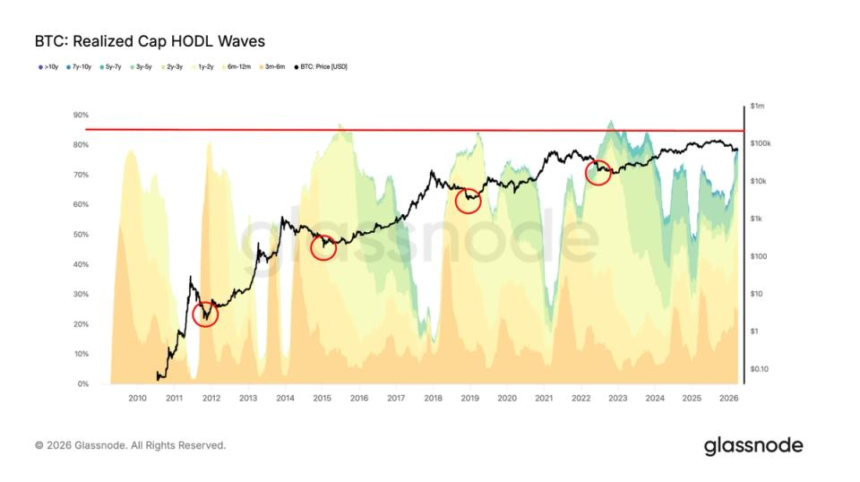
A notable indicator amidst this phase is the Realized Cap HODL Waves metric, as analyzed by Glassnode. This tool categorizes Bitcoin’s supply based on the time that coins have remained idle, with different bands reflecting various holding durations. Each category is then weighted by the price at which the coins last changed hands on the blockchain. This historical data suggests a pattern where market bottoms often coincide with long-term holders—those who have kept their assets for six months or more—controlling at least 85% of the available supply.
Currently, long-term holders account for around 80% of Bitcoin’s total supply. If this trend persists, it may indicate that the market is approaching a bottoming phase. However, experts caution that several months of sideways trading and consolidation may still lie ahead before any significant price movements can be expected.
In summary, while the market grapples with immediate price challenges, the behavior of long-term holders suggests a potential stabilization might be on the horizon. Investors will be closely monitoring these developments as they navigate the complexities of the cryptocurrency landscape in the coming months.