After an exhilarating summer, the cryptocurrency market is experiencing a downturn, commonly referred to as “crypto winter.” Bitcoin (BTC), which had recently reached an impressive $100,000, is back in the spotlight but is now facing uncertainty. The question on many investors’ minds is whether to buy the dip or brace for further declines.
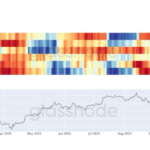
With the current price hovering around $100,000, opinions are divided on whether Bitcoin will first move toward $75,000 or $125,000. Analysts suggest that tracking the flow of investments might provide insights into Bitcoin’s upcoming trajectory.
Since the start of 2025, Bitcoin has had a tumultuous journey. Beginning the year close to $100,000, it saw a dip to $75,000 before rocketing to $126,000 in early October. However, many investors were let down as Bitcoin’s price recently fell back to the $100,000 mark, indicating a volatile round trip.
Some analysts, like Geoffrey Kendrick from Standard Chartered, remain optimistic, believing that Bitcoin’s recent dip under $100,000 may be the last one ever. If Kendrick’s thesis holds that decentralized finance will eventually surpass traditional finance, Bitcoin’s future targets could significantly exceed $125,000. However, various bearish factors also warrant consideration.
The precise reasons behind the recent Bitcoin price downturn are complex. Some analysts attribute the decline to factors like concerns stemming from a potential U.S. government shutdown and the rising strength of the dollar. A strong dollar often correlates with reduced risk appetite among investors, which can impact high-risk assets like Bitcoin.
Citigroup analysts highlight tightening liquidity conditions as another challenge for Bitcoin holders. As the U.S. Treasury has bolstered its cash reserves, liquidity in the banking system has decreased, imposing pressure on risk-related investments. Yet, they also suggest that improving liquidity conditions might provide support for Bitcoin in the near future.
Thomas Lee, co-founder and Head of Research at Fundstrat Global Advisors, ties these issues together by emphasizing Bitcoin’s sensitivity to market liquidity and investor perception. Lee finds the current headwinds—such as government uncertainty and Federal Reserve policies—significant but believes these obstacles could turn into tailwinds once resolved.
In the broader context, it seems that institutional interest in Bitcoin remains robust. According to the Alternative Investment Management Association (AIMA), 55% of traditional hedge funds reported exposure to digital assets in 2025, an increase from 47% in the previous year. Nearly half of these institutional investors are encouraged by the changing regulatory landscape in the U.S. to bolster their digital asset allocations.
Moreover, interest in tokenization among hedge funds is growing, with AIMA noting that many funds are beginning to take digital assets seriously as an investment class. This trend suggests that as institutional conviction strengthens, digital assets, including Bitcoin, are shifting from niche to mainstream.
While aligning investment strategies with institutional trends can be prudent, it does not guarantee profitability. However, based on the current dynamics, experts lean toward anticipating Bitcoin aiming for the $125,000 mark rather than sliding to $75,000. In the event that Bitcoin does retreat to $75,000, it may present a buying opportunity for hedge funds, even as retail investors scramble to sell in a panic.