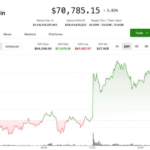
This week, Bitcoin experienced a brief decline, dropping under $105,000 amidst renewed anxieties in the U.S. banking sector. However, a surprisingly strong performance from regional banks along with shifting geopolitical dynamics provided the cryptocurrency with a temporary boost. After a nearly 5% decline within two days, Bitcoin stabilized around $106,000 on Friday morning, responding to fluctuations in traditional financial markets.
The plunge in Bitcoin prices coincided with significant unrest among U.S. regional bank shares, which had previously been roiled by market uncertainties. Notably, banks such as Truist Financial, Regions Financial, and Fifth Third Bancorp reported better-than-expected earnings, leading to a rebound among these financial institutions. Data indicated that these banks showed lower provisions for credit losses than analysts had anticipated, suggesting that fears regarding the stability of the financial system might have been overstated. This revelation allowed the S&P Regional Banks Index to recover some of the losses sustained following a disastrous 6.3% drop on Thursday, triggered by concerns of commercial loan fraud at Zions Bancorp and Western Alliance.
As recovery set in, Zions Bancorp saw an uptick of over 6%, while Truist and Western Alliance gained 2% and 1.6%, respectively. Traders began to reassess previous fears, leading to a more optimistic outlook. Even major European banks, including Barclays and Deutsche Bank, as well as Japanese institutions like Mizuho and Sumitomo Mitsui, started to recover after facing significant losses earlier in the week.
Analysts noted that regional banks remain well-reserved for potential losses, highlighting strengthened capital buffers compared to the previous year. This observation has given credence to claims that earlier reactions may have been excessive.
Additionally, markets benefited from improved diplomatic relations between the U.S. and China. President Donald Trump announced that his administration’s steep tariffs on Chinese goods would not be permanent, alongside plans for a summit with Xi Jinping in the coming weeks. This news enhanced market sentiment, prompting a 1.2% increase in U.S. stock futures as traders considered the possibility of decreased tensions between the two largest economies.
Despite the positive developments, crypto traders remain cautious. Although some risk appetite appears to have returned, Bitcoin has struggled to break decisively past the $105,000 threshold. This suggests a delicate balancing act, with market participants caught between bullish macroeconomic optimism and persistent anxieties.
As questions linger on the sustainability of this market rally, analysts ponder whether the current situation signals an end to the bull run or merely a short-term pause. The robustness of regional banks offers a flicker of hope, indicating financial stress may not be widespread. Conversely, Bitcoin’s failure to rally alongside diminishing credit concerns leaves traders on edge.
Future developments could hinge on the outcomes of the forthcoming Trump–Xi discussions and the continued performance of U.S. banks. Should these factors contribute to a more stable trading environment, Bitcoin may find its way back toward upward trends. However, should current relief fade or unexpected financial challenges arise, the $100,000 support level could be under threat again.
In an intriguing twist, Bitcoin, often seen as an alternative asset to traditional banking, now finds itself inextricably linked to the fortunes of legacy financial institutions, vividly illustrating the complex interplay of modern market dynamics.