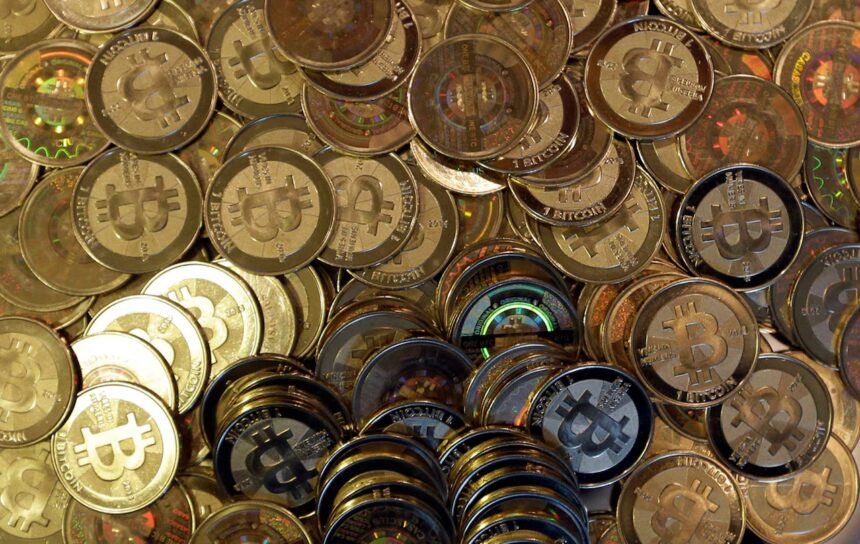
Bitcoin, the leading cryptocurrency, has recently fallen below $67,000, marking its lowest price in over a year. The significant drop occurred on Thursday, coinciding with a deterioration in broader financial markets, as investors began liquidating their digital asset holdings. This downturn has resulted in a substantial decrease in the global cryptocurrency market cap, erasing hundreds of billions of dollars since its peak in late 2025.
The recent plunge is striking given that Bitcoin reached an all-time high of over $126,000 in October 2025. Many factors contribute to this decline. Large Bitcoin holders, along with institutional funds, are actively selling their assets, which is placing additional pressure on the cryptocurrency’s price. Analysts point to rising interest rates and diminishing investor confidence in high-risk assets, including cryptocurrencies, as factors making traders more cautious.
Furthermore, the performance of Bitcoin exchange-traded funds (ETFs) is under scrutiny, as outflows from these funds can exacerbate market selling pressure. The ramifications of Bitcoin’s decline extend beyond its own ecosystem, affecting other cryptocurrencies, often referred to as altcoins, as traders pivot toward more stable, traditional investments.
The broader financial landscape is also experiencing a downturn, particularly in U.S. stock markets, leading some investors to reconsider their perception of Bitcoin. Rather than viewing it as a hedge against uncertainty, it has come to be seen as a risky investment.
Despite the current environment of uncertainty, there are traders who view this drop as an opportunity to acquire Bitcoin at a lower price, should market confidence eventually return. However, a prevailing sentiment among investors remains one of caution as they navigate this volatile period.