In a notable shift within the cryptocurrency sector, Bitcoin’s hashrate has recorded its sharpest decline since the April 2024 halving event, raising concerns about the future stability of the network. Matthew Sigel, the head of digital assets research at VanEck, highlighted a significant drop in the 30-day simple moving average (SMA) hashrate, indicating the challenges miners are currently facing.
The hashrate, which reflects the total computational power dedicated to securing the Bitcoin network, has recently suffered a blow, particularly following information from former Canaan chairman Jack Kong. In a post on X, Kong revealed that approximately 400,000 mining machines have gone offline in China, contributing to a stark decline in computing power. This dip amounted to roughly 100 exahashes per second (EH/s), reflecting an 8% decrease compared to the previous day. In quantitative terms, this reduction translates to more than 400,000 mining machines ceasing operations.
Kong further noted that mining farms in regions like Xinjiang have been shutting down systematically. This trend is drawing attention to the implications for the global mining landscape, suggesting that the U.S. may indirectly benefit from these closures without overtly intervening. This news follows closely after China regained its status as the world’s third-largest Bitcoin mining hub, which had accounted for approximately 14% of the global hashrate.
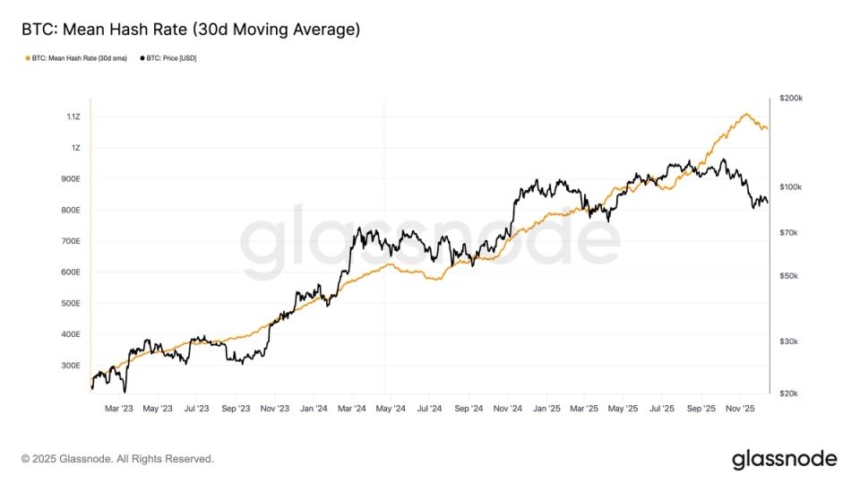
Recent data from Glassnode indicates a notable drop in the total hashrate, decreasing from around 1.1 zettahash per second to just above 1 ZH/s. This significant pullback comes amidst ongoing pressure on miner revenues, with hash prices falling to near $37 per petahash per second—marking the lowest level in about five years. Despite these challenges, the current projection suggests that Bitcoin mining difficulty might see a decline of approximately 3%. This potential reduction could provide some temporary relief to miners, although the current difficulty level stands at 148.2 trillion (T), just shy of its all-time high.
As the landscape continues to evolve, the future of Bitcoin mining remains uncertain, with miners facing increasing pressures and fluctuating operational circumstances.