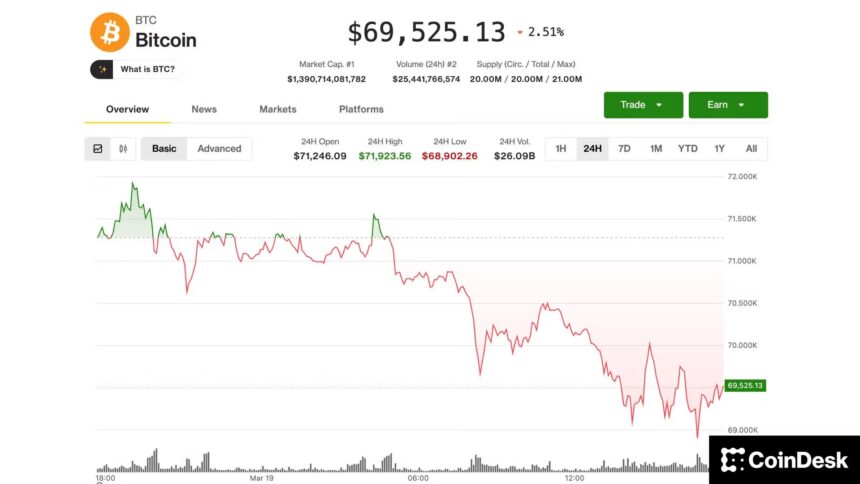
Bitcoin hovered around $69,000 on Thursday as tensions in Iran escalated and tensions spread throughout the Middle East, impacting energy infrastructure and global markets. With oil prices back on the rise, investors became more cautious following reports of attacks on energy assets. After a Politico article indicated that the U.S. was not considering a ban on crude exports, oil prices rebounded toward $100 a barrel. This development kept inflation concerns at the forefront of investor sentiment.
The backdrop of rising oil prices weighed heavily on traditional markets, with investors starting to speculate that central banks may postpone rate cuts or even consider rate hikes in response to inflationary pressures triggered by the energy crisis and supply chain disruptions. The S&P 500 and Nasdaq both dropped nearly 1% in morning trading, marking fresh lows not seen since 2026.
In contrast to the turmoil in traditional markets, metals experienced significant declines. Gold plummeted by 5% to around $4,500 an ounce, hitting its lowest level since early February, while silver saw an even steeper drop of 6.6%. This came after a period of substantial gains for both precious metals.
Amid this market turbulence, cryptocurrencies displayed relative stability. Bitcoin was trading at approximately $69,400, down by about 2.6% for the day, while major tokens like ether, XRP, BNB, and solana experienced minor declines under 3%. The broader CoinDesk 20 Index was down about 2.1%.
Crypto-related stocks also faced downward pressure, although not as drastically as traditional equities. Coinbase saw a 1.7% decrease, bitcoin investment firm MicroStrategy fell by 2.6%, and stablecoin issuer Circle pulled back by 6%, after an impressive doubling in value over the past three weeks.
The simultaneous drop in both gold and bitcoin suggests that investors are engaging in a broader de-risking approach rather than shifting assets into traditional safe havens. Alvin Kan, COO of Bitget Wallet, pointed out that rising energy prices are driving inflation expectations, reinforcing a “higher-for-longer” outlook on interest rates and tightening liquidity, creating challenges for risk assets.
Despite the market’s caution, bitcoin has outperformed gold by approximately 20% during the initial stages of the ongoing conflict in Iran, marking a unique trend for an asset that is often viewed as riskier. Bryan Tan, a trader at Wintermute, noted that the absence of sustained momentum above $75,000 indicates continued market apprehension.
Tan emphasized the importance of a cautious stance: “When sentiment swings on each headline about the conflict, and correlation to oil prices are so elevated, being flat is a strong position,” he said. He suggests that market participants should hold off on making significant moves until there is a clear signal or material change in market conditions.