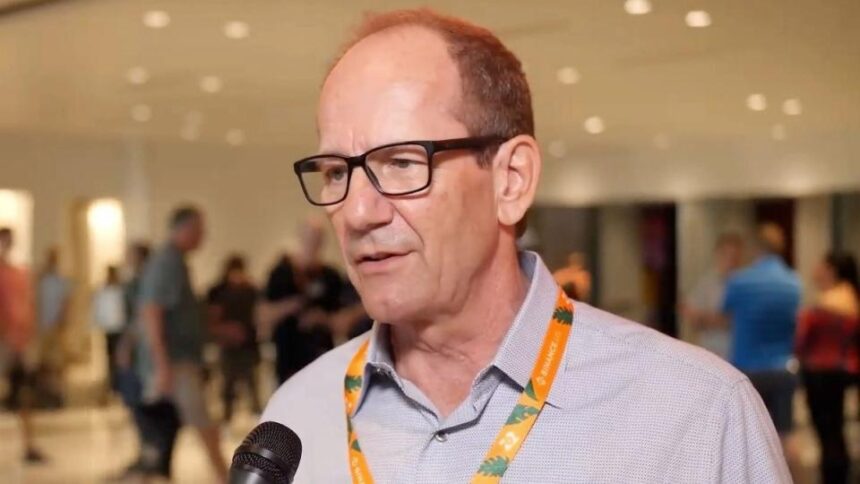
The bitcoin mining industry faces significant challenges characterized by intensified competition, increasing energy demands, and declining profits. Fred Thiel, CEO of MARA Holdings, articulated these pressures in a recent interview, highlighting that the landscape of bitcoin mining is evolving into a more ruthless arena where only those with access to affordable and reliable energy sources, or innovative business models, will continue to thrive.
Thiel described bitcoin mining as a “zero-sum game,” indicating that as more players enter the market with additional capacity, it becomes progressively harder for existing miners to maintain profitability. “Margins compress, and the floor is your energy cost,” he stated, emphasizing the critical role that energy expenses play in determining a miner’s financial viability.
Amid this backdrop, many miners are diversifying their operations, exploring adjacent sectors like artificial intelligence and high-performance computing infrastructure. Thiel noted that some mining firms are losing out to competitors who can operate their own hardware at lower costs, which is increasingly becoming a stark reality as global hashrate continues to increase.
“Major manufacturers and companies like Tether are running their own mining operations, since there’s less demand for mining equipment from third-party customers,” Thiel explained. This shift contributes to the intensifying competition within the industry, potentially squeezing the margins of smaller players even further.
Looking forward, Thiel expressed concerns regarding the impending bitcoin halving scheduled for 2028, which will reduce block rewards to just over 1.5 BTC. Unless there is a significant increase in transaction fees or a surge in bitcoin’s price, the economics of mining could become untenable for many operators. “Bitcoin was designed with the idea that transaction fees would eventually replace the subsidy,” he remarked, pointing out that, thus far, this substitution has not materialized. Most of the short-lived spikes in transaction fees, attributed to phenomena such as Ordinals and inscriptions, have ultimately failed to provide a steady replacement for block subsidies.
As the competitive landscape changes, Thiel indicated that smaller miners are under increasing pressure. In contrast, larger entities are adapting by securing energy sources and investing in independent infrastructure like AI operations. He underscored the importance of cost management in this tight market, suggesting that his strategy aims to position MARA Holdings in the lowest production cost quartile. “In a tight market, 75% of the other guys have to shut down before we do,” he stated.
Thiel anticipates that the market will undergo a self-regulating process as profitability thresholds are reached, but warned that this threshold is on the rise. He predicted that by 2028, the model of being a miner solely reliant on grid power will become increasingly obsolete. “You’ll either be a power generator, be owned by one, or be partnered with one,” he concluded, signaling a significant shift in the operational dynamics of the bitcoin mining industry.