



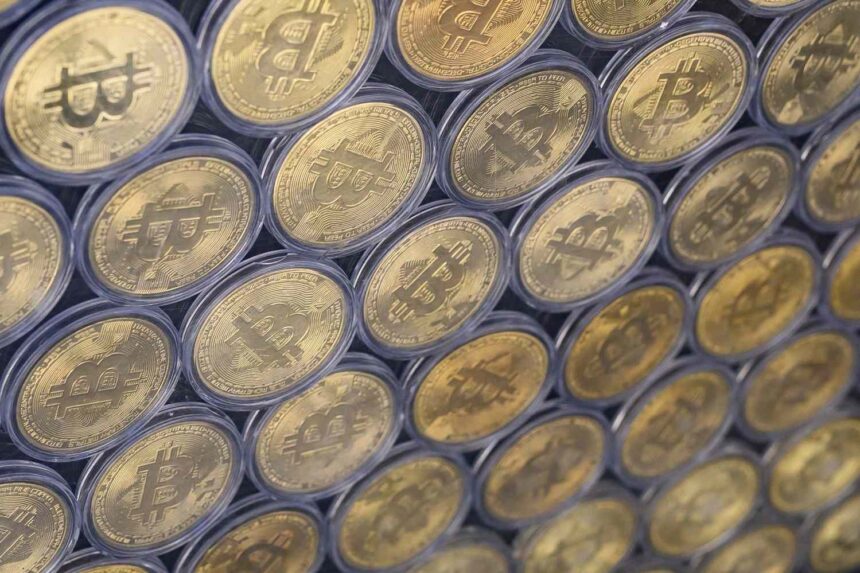
On October 10, the price of bitcoin experienced a significant decline, briefly dipping below $110,000, amid what traders are describing as the most substantial single-day liquidation event in the history of cryptocurrency. This downturn was not limited to bitcoin; lesser-known cryptocurrencies nosedived as well, with some dropping an astonishing 80% over the weekend. The repercussions extended to crypto-linked stocks, which also faced considerable losses.
The trigger for this upheaval appears to be escalating trade tensions between the U.S. and China. A sell-off was initiated on Friday as the market reacted to new restrictions imposed by Beijing on rare-earth minerals exports, which prompted a stark warning from President Donald Trump regarding a potential 100% tariff on Chinese goods. As these geopolitical frictions escalated, bitcoin, known for its traditional association with gold, began to diverge from its safe-haven status and behaved more like other risk assets, including stocks.
According to data from Coinglass, over $19 billion in leveraged crypto positions were liquidated within a 24-hour window, affecting roughly 1.6 million traders. The firm suggested that this estimate could be conservative, indicating that the total might be even higher than recorded. Bitcoin had initially benefited from a “debasement trade,” yet with the renewed trade conflict, it followed a downwards trajectory alongside riskier assets rather than acting as a hedge.
Sean Farrell, head of digital assets at Fundstrat, emphasized that the looming concerns over tariff increases played a critical role in the sudden market downturn. The chaos in the crypto market was exacerbated by operational intricacies; as traders sought to exit positions amid reduced liquidity, selling pressure caused significant price drops. Notably, while crypto markets do not close, trading volumes typically rise and fall in correlation with U.S. stock market hours.
Within this tumultuous environment, bitcoin dropped below the $110,000 mark, while altcoins such as Ethereum and Solana also saw double-digit declines. Some lesser-known cryptocurrencies experienced catastrophic losses, with some plunging by as much as 80%. Prices were not consistent across various trading platforms, leading to price dislocation. For instance, Solana traded for approximately $20 less on Binance compared to Coinbase at one point.
Signs of recovery began to emerge as bitcoin climbed back above $112,000, but many crypto-related stocks—such as MicroStrategy, Coinbase, Circle, and Robinhood—were still experiencing declines in their market values.
In a more optimistic commentary, Larry Fink, CEO of BlackRock, defended bitcoin’s position within investor portfolios in a recent CBS interview, asserting that cryptocurrency holds a role similar to that of gold, suggesting that it could still offer value to investors despite the recent market turbulence.