









Bitcoin’s recent rally has taken a hit, retracting from an astounding peak of $124,000 as a crisis unfolded at the Federal Reserve. Despite this recent setback, the cryptocurrency has nearly doubled in value compared to the same period last year. Analysts anticipate significant daily buying pressure between $20 million and $28 million, stirring speculation that the rise of cryptocurrencies could lead to new financial powerhouses akin to historical figures like the Rockefellers or Rothschilds.
In a striking development that aligns with the growing momentum in the crypto space, Balaji Srinivasan, former Chief Technology Officer of Coinbase, made a bold claim at a Bitcoin Asia event, asserting that Bitcoin’s success could lead to the dissolution of the Federal Reserve’s influence. He articulated, “When bitcoin wins, it ends the Fed,” emphasizing that a world dominated by Bitcoin would mark the end of the central bank’s control over monetary policy. Srinivasan argues that Bitcoin’s capped supply of 21 million can replace volatile interest rates with a steadier, algorithmic monetary policy, especially as national debt swells.
The U.S. national debt, which ballooned to $37 trillion due to extensive pandemic-related expenditures, is drawing attention from financial experts, including hedge fund billionaire Ray Dalio. Dalio warned that this mounting debt might lead to a “debt-induced heart attack” within the next few years. He highlighted the staggering $1 trillion yearly interest burden on the debt as a critical factor suffocating other governmental spending, suggesting that without significant adjustments, the economic landscape could face dire consequences.
Dalio further noted that the Federal government’s projected spending of around $7 trillion, with only $5 trillion in expected revenue, compels it to issue approximately $2 trillion in new debt, along with an additional $1 trillion to cover interest and $9 trillion to refinance existing obligations. Current trends hint at the Federal Reserve potentially resuming interest rate cuts, a move that may spark renewed inflationary pressures. Dalio indicated that if inflation isn’t contained, it could undermine the dollar’s stability and prompt a shift towards alternative currencies like cryptocurrencies, which offer a finite supply.
As the financial discourse grows more chaotic, bitcoin advocates draw connections between the burgeoning debt crisis and bitcoin’s rising allure. Financial commentator Max Keiser, known for his contentious views on the existing financial system, predicts that the overwhelming $200 trillion debt will necessitate continuous printing of money, eventually propelling the price of Bitcoin to an astonishing $2 million.
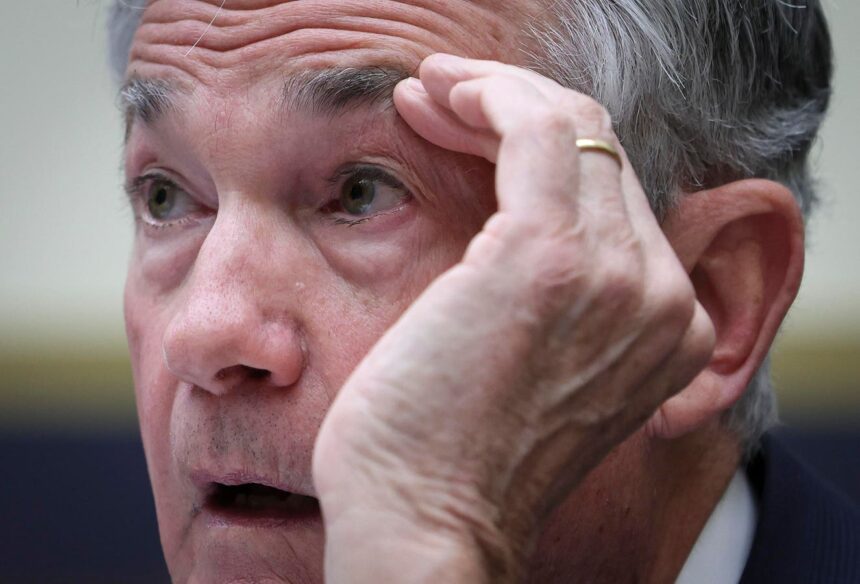
The political backdrop also complicates the situation, with President Donald Trump intensifying his criticism of the Federal Reserve and its leadership. The prolonged tension between the president and Fed Chair Jerome Powell has escalated, especially after Powell miscalculated inflation trends and hesitated to respond aggressively to increasing price pressures. This conflict has influenced market perceptions, particularly regarding future monetary policies.
In the context of these developments, analysts from 10x Research have underscored the critical nature of the coming weeks for cryptocurrencies, citing major on-chain support for Bitcoin and pivotal technical levels that could dictate its future trajectory. They anticipate key economic data releases, such as the Fed’s Beige Book and the August jobs report, to exert influence over the Fed’s upcoming interest rate discussions.
Additionally, there are predictions of a “great wealth transfer” that will see $84 trillion move from older to younger generations, fostering new dynasties of wealth in the cryptocurrency realm. This shift could potentially create a landscape where Bitcoin and cryptocurrencies dominate wealth accumulation, effectively disrupting traditional financial hierarchies as suggested by Srinivasan. His assertion that “when bitcoin wins, fiat billionaires get flipped” indicates a tectonic shift in how wealth is perceived and accumulated in an increasingly digital economy.
Amid these uncertainties and historical shifts, the crypto market remains on edge, with watchers eagerly monitoring the interplay between governmental actions, economic indicators, and the evolving role of cryptocurrencies.