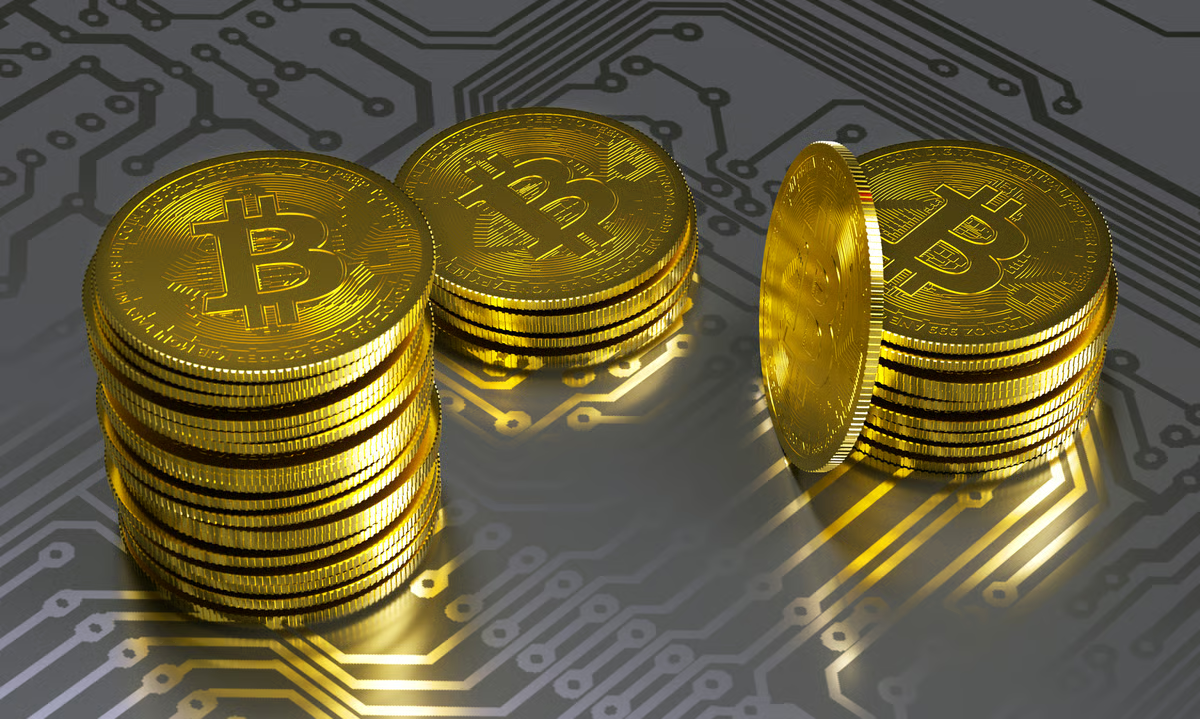
Cryptocurrency investors have faced a challenging landscape in 2026, with many top tokens declining due to a combination of elevated interest rates, tough macroeconomic conditions, and competition from traditional commodities such as gold and silver. In this environment, analysts recommend a more selective approach to cryptocurrency investments, focusing on established assets while avoiding riskier alternatives.
Bitcoin, despite experiencing a 30% decline over the past year, remains the leading cryptocurrency with a market capitalization of $1.4 trillion. The token has managed to recover significantly, increasing over 70% in value over the past five years, despite enduring a tumultuous period characterized by significant price swings. From a peak of around $68,000 in November 2021, Bitcoin fell to approximately $16,000 by November 2022. However, it has since bounced back, benefiting from several critical factors.
Growing investor confidence, fueled by declining interest rates, has led many to return to Bitcoin and other riskier assets. The recent approval of the first spot price exchange-traded funds (ETFs) by the Securities and Exchange Commission (SEC) has added to the positive sentiment surrounding Bitcoin. Furthermore, the upcoming halving event in 2024—which reduces mining rewards—has resulted in increased interest from institutional investors looking to use Bitcoin as a hedge against inflation.
The operational aspects of Bitcoin confer significant advantages in this market. It continues to be actively mined using advanced computer technology, and its total supply is capped at 21 million tokens, with nearly 20 million already mined. As attention shifts toward Bitcoin’s anticipated halving in 2028, its rarity may eventually position it similarly to gold, potentially stabilizing its price as investors view it as a secure asset against inflationary pressures from fiat currencies.
In contrast, analysts recommend steering clear of smaller cryptocurrencies, particularly meme coins like Shiba Inu. Over the past year, Shiba Inu has lost nearly 60% of its value. Created in 2020 as a parody of Dogecoin, it initially surged, climbing approximately 12,000% since its launch. However, its growth trajectory appears increasingly compromised due to several factors.
One significant concern for Shiba Inu is that it cannot be mined. Its entire supply of one quadrillion tokens was pre-mined on the Ethereum blockchain, with a substantial portion burned by Ethereum co-founder Vitalik Buterin. This lack of scarcity diminishes its potential as a hedge against fiat currency devaluation, a critical characteristic that supports the value of assets like Bitcoin.
Additionally, Shiba Inu has yet to secure any approvals for spot price ETFs, limiting its appeal, particularly among institutional investors. Despite a recent attempt by T. Rowe Price to file for a Shiba Inu ETF, uncertainty looms over its potential approval.
Finally, Shiba Inu’s utility pales in comparison to more prominent platforms like Ethereum, which supports extensive development across its layers. While Shiba Inu has launched its own Layer 2 blockchain, Shibarium, aimed at facilitating Ethereum-compatible applications, its long-term viability as a major developer platform remains questionable.
In summary, while Bitcoin presents a promising investment opportunity amidst a shaky market, Shiba Inu may struggle to maintain its relevance in the cryptocurrency landscape. With current trends and uncertainties, Bitcoin appears poised for recovery, while altcoins like Shiba Inu may face significant challenges ahead.