Bitcoin experienced a notable uptick as the Japanese yen weakened following a widely anticipated interest rate hike by the Bank of Japan (BOJ). This adjustment saw the central bank raise its short-term policy rate by 25 basis points to 0.75%, marking the highest level in approximately 30 years. This move underscores a gradual shift away from a prolonged period of ultra-loose monetary policy.
In its policy statement, the BOJ acknowledged that inflation has consistently surpassed its 2% target due to rising import costs along with more robust domestic price dynamics. However, policymakers pointed out that even with this increase, interest rates when adjusted for inflation remain negative, suggesting that monetary conditions continue to be supportive despite the adjustment.
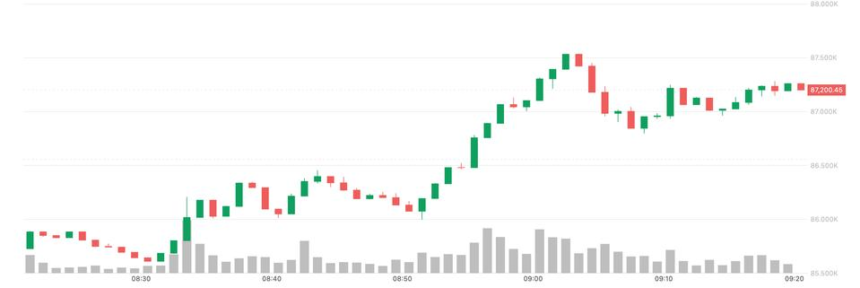
Following the announcement, the Japanese yen fell, trading at 156.03 per U.S. dollar, a decrease from 155.67 prior to the decision. In response to the market dynamics, Bitcoin, which is the dominant cryptocurrency by market capitalization, rallied from $86,000 to a peak of $87,500 before slightly retracting to around $87,000, according to data from CoinDesk.
This market reaction reflects expectations, as analysts had largely forecasted the rate hike. Moreover, many market participants had maintained long positions in the yen leading up to the announcement, effectively preventing any significant buying momentum in response to the news.
In the weeks leading up to the decision, concerns had emerged that the rate hike could bolster the yen, potentially leading to an unwinding of yen carry trades and a broader shift towards risk-averse sentiment in financial markets. Historically, Japan’s prolonged low or negative interest rates made the yen a favored currency for carry trades. Investors frequently borrowed yen at low costs to invest in higher-yielding assets, such as U.S. tech stocks, Treasury notes, and emerging market bonds, which significantly enhanced global liquidity and risk appetite.
Despite these fears potentially affecting risk-asset investors, experts noted that the concerns were largely unfounded. Even post-hike, Japanese rates remain significantly lower than those in the U.S., diminishing the likelihood of a widespread unwinding of carry trades. This indicates a lasting preference for leveraging opportunities in riskier markets despite a changing interest rate landscape.