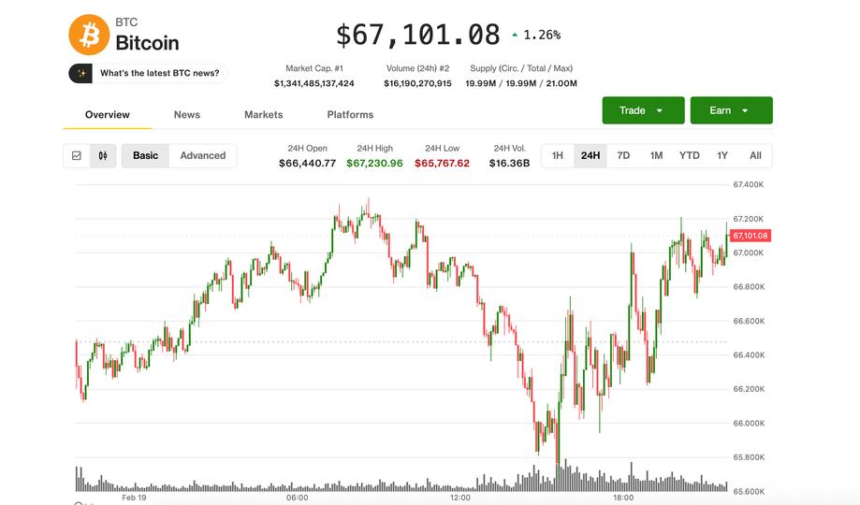
Bitcoin regained stability on Thursday, trading around $67,323.53 after dipping below the crucial $66,000 mark during early U.S. trading hours. The largest cryptocurrency showed a slight increase of approximately 1% over the past 24 hours, signaling resilience in the face of market volatility.
In contrast, the CoinDesk 20 Index experienced limited movement, with notable cryptocurrencies such as ether (ETH), XRP, BNB, Dogecoin (DOGE), and Solana (SOL) either flat or slightly reduced during the same timeframe. This tepid performance in altcoins suggests a cautious approach among investors amid ongoing fluctuations in the crypto markets.
Crypto-related equities saw modest increases, highlighted by gains among bitcoin mining companies CleanSpark (CLSK) and Marathon Digital Holdings (MARA), which both surged by around 6%. However, traditional stock market indices reflected a downward trend, with the S&P 500 and Nasdaq 100 declining by 0.3% and 0.6%, respectively.
On the regulatory front, there were tentative steps forward regarding a structured digital asset market bill. Recent discussions facilitated by the White House between representatives from the crypto industry and banking sectors indicated incremental progress, albeit without a finalized agreement.
Yet, the shadows of the recent crypto downturn persist, with companies like Chicago-based crypto lender Blockfills facing significant challenges. The firm is reportedly exploring a potential sale following a $75 million lending loss stemming from the recent market collapse. Blockfills had to temporarily halt client deposits and withdrawals last week, raising concerns about broader vulnerabilities within the sector. While the current fallout seems contained compared to the significant disruptions seen with firms like Celsius and FTX in 2022, investor anxiety remains high, especially with memories of past crises still fresh.
Outside the cryptocurrency space, external pressures are contributing to a cautious sentiment among investors. Rising stress in credit markets was highlighted by private-equity firm Blue Owl, which has permanently restricted redemptions from its $1.7 billion retail-focused private credit fund. Consequently, Blue Owl’s shares fell 6%, with other significant private credit managers such as Apollo Global, Ares Capital, and Blackstone also experiencing similar declines.
Geopolitical tensions further complicate the landscape, particularly around the potential for U.S. military action against Iran, which has contributed to a rise in crude oil prices. Oil prices surged by 2.8%, surpassing $66 per barrel and reaching their highest level since August.
In light of this uncertainty, traders in the crypto derivatives market are exercising caution. Observations from Jake Ostrovskis, the head of OTC at trading firm Wintermute, indicate that many traders are opting for downside protection while simultaneously limiting upside potential. This strategy suggests a reluctance to commit fully amid fears of another price drop, with average U.S. bitcoin ETF cost basis hovering around $84,000. As a result, many ETF investors are currently below water by approximately 20%, which raises the risk of “capitulation selling” if prices decline further. However, total ETF holdings remain relatively close to their peak, indicating that institutions are trimming their exposure rather than making a hasty exit from the market.