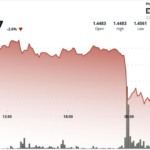
The recent fluctuations in the Bitcoin price, which saw it dip below $100,000 for the first time since June before stabilizing, serve as a reminder of the inherent volatility in cryptocurrency investments. Such downturns are not new, especially for seasoned investors who have navigated previous periods of market distress, including the significant downturn experienced from 2018 to 2019 and the aftermath of the FTX collapse. The cryptocurrency landscape is characterized by sharp price swings, and the current market conditions underscore that this volatility remains an integral part of trading cryptoassets.
Despite some favorable policy changes and a shift in administration in Washington D.C. that have aimed to support the crypto sector, the broader adoption among both individual and institutional investors remains a work in progress. Geopolitical tensions, trade disputes, and an ongoing government shutdown continue to complicate economic decision-making, yet the resilience of both crypto and equity markets in the face of these challenges is notable. Nevertheless, the recent market downturn offers several important lessons for investors.
One significant trend is the growing intersection between cryptocurrency and artificial intelligence (AI). Over a span of just a few weeks in early 2025, the market capitalization of AI-related crypto assets surged by 29%, reaching over $31 billion. This rise coincided with AI crypto agents outperforming traditional manual traders by 15-25%. As both AI and crypto markets become more intertwined, the ability to deploy automated trading bots has proven invaluable, allowing constant market analysis, strategy refinement, and enhanced forecasting capabilities.
The mining sector, reliant on substantial energy and processing power, is also seeing increased collaboration with AI technologies. Recent partnerships reflect this growing relationship, further consolidating both industries’ positions within the broader technology asset class. The recent sell-off of inflated AI valuations highlights this convergence, leading to corresponding drawdowns in crypto.
Additionally, Bitcoin’s classification as a risk-on asset has been further emphasized by recent market behavior. Following the SEC’s approval of a spot Bitcoin ETF in January 2024, a surge in institutional funds was expected to drive price increases for Bitcoin and other cryptoassets. However, escalating geopolitical issues and trade disputes have led to shifts in trading patterns. Many newer investors, both institutional and retail, are feeling the pinch as market conditions become less favorable. With diminishing ETF inflows and larger Bitcoin holders beginning to sell off their assets, the enthusiasm that once characterized the market appears to be waning.
As uncertainty persists regarding Federal Reserve rate decisions and with the quality of economic data declining, the landscape becomes increasingly treacherous for investors who entered the market during its recent bull run. This volatility indicates a more cautious sentiment among investors, challenging the previously bullish outlook.
Ultimately, the intrinsic volatility of the cryptocurrency ecosystem remains a defining characteristic, rather than a defect. While there have been advancements in regulatory frameworks and increased institutional interest, the overall landscape of cryptocurrency continues to be that of an emerging asset class. With a total market valuation exceeding $3 trillion, the crypto sector boasts significant growth, yet its market capitalization still pales in comparison to more established asset classes.
In this context, Bitcoin’s severe price fluctuations illustrate the nature of the market. In traditional equity markets, such erratic movements would spark extensive scrutiny and concern; however, for cryptocurrency investors, such volatility is a familiar reality. The landscape continues to evolve with improvements in investor education, favorable policies, and inflows of investment capital. Nonetheless, market forces and external influences collectively ensure that price volatility remains a staple of cryptocurrency investments as the sector matures.