The cryptocurrency market has been characterized by significant fluctuations in 2023, with many investors reflecting on the year as one of ups and downs. Following a surge in prices late last year, primarily after Donald Trump’s presidential election victory in November 2024, the market has seen notable corrections. Trump’s victory was initially met with enthusiasm from crypto enthusiasts, buoyed by expectations of a friendlier regulatory environment. Despite favorable executive actions and new legislation from Congress, the enthusiasm didn’t sustain as macroeconomic concerns started to dominate the market narrative.
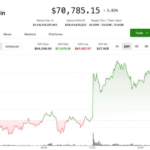
As of mid-December, Bitcoin, the largest cryptocurrency by market capitalization, has experienced a decline of approximately 10% over the year. XRP, another significant player in the space, has faced an even harsher downturn, with a year-to-date drop exceeding 21%. This raises the question of which of these cryptocurrencies might represent a better investment opportunity.
Bitcoin, created by the anonymous Satoshi Nakamoto, has long served as a benchmark for the entire cryptocurrency market. The cryptocurrency continues to rely on a proof-of-work consensus mechanism, which is increasingly criticized for its high energy consumption and inefficiencies. Despite these concerns, Bitcoin has maintained its dominance, bolstered by a narrative that positions it as a form of “digital gold.” This argument is driven by inflation fears and growing skepticism about the U.S. government’s burgeoning debt and monetary policies that could devalue the dollar, hence making Bitcoin an attractive store of value akin to gold.
At its current price around $88,568, Bitcoin’s market cap sits at approximately $1.8 trillion, reflecting both its vast influence and the skepticism surrounding its volatility. Even with a decline of over 30% since reaching all-time highs in October, many investors remain confident in Bitcoin’s resilience, given its historical ability to recover from downturns. The regulatory landscape has also evolved positively under Trump’s administration, with initiatives like the U.S. Strategic Bitcoin Reserve and efforts by regulators to clarify the legal framework governing cryptocurrencies.
XRP, now ranked as the fifth-largest cryptocurrency, has found renewed momentum following changes in regulatory leadership resulting from the new administration. A pivotal moment for XRP occurred when the SEC opted to drop a significant lawsuit against Ripple Labs, the company behind XRP. This development has positioned XRP as a potentially disruptive force in international payments, capable of processing up to 1,500 transactions per second.
Ripple’s technology provides institutions with flexible payment options, facilitating low-cost conversions between fiat and cryptocurrencies, and allowing for on-demand liquidity, thereby optimizing capital usage. Despite its advantages, the question remains whether XRP can secure a substantial portion of the global payments market in the face of stiff competition from both traditional and cryptocurrency-based solutions.
When evaluating the potential of these leading cryptocurrencies, a case can be made for both Bitcoin and XRP. However, preference leans toward Bitcoin due to its unique position in the market and its potential as a diversification asset. The “digital gold” narrative surrounding Bitcoin, despite remaining unproven, offers a compelling case for its long-term value, particularly as its market cap is still a fraction of that of gold, suggesting untapped potential.
While Bitcoin’s volatility and correlation to tech stock fluctuations present concerns, its historical sturdiness following sell-offs adds an element of confidence for long-term investors. Overall, a balanced approach that involves a smaller, speculative allocation to both Bitcoin and XRP could be warranted, considering their respective challenges and opportunities within the evolving financial landscape.