A recent forecast indicating an annualized gain of 26% for a leading cryptocurrency suggests a significant shift from the astounding 71% returns observed over the past decade. While investing in innovative technologies inherently carries risks, astute investors who conduct thorough research may find strong justification for maintaining their positions in these assets. Historically risky bets can transform over time into more stable investment opportunities, a trend suggested by the trajectory of a prominent digital currency, which still shows considerable potential for upside.
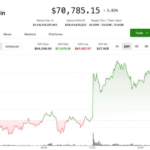
As of January 26, the price of Bitcoin surged approximately 22,000% over the last ten years, prompting predictions that this digital asset could experience a tenfold increase in price over the upcoming decade. The market capitalization for Bitcoin reached $1.7 trillion on this date, and projections estimate it could grow to around $17 trillion by early 2036. If such a scenario plays out, it would imply a Bitcoin price escalation to approximately $880,000.
The rationale for this optimistic forecast hinges on the comparison between Bitcoin and gold, which has historically been viewed as the premier store of value. In the last two years alone, gold’s price has jumped by 99%, while the total above-ground gold value is estimated at $35 trillion. The expectation that Bitcoin could achieve half of this valuation within a decade is increasingly plausible.
Key to this gaining acceptance is a broadening perspective among individuals, corporations, investment managers, and governmental entities viewing Bitcoin as a more effective store of value. While gold’s impressive performance is a benchmark, Bitcoin has considerable hurdles to overcome, particularly amidst rising geopolitical tensions and climbing sovereign debt levels.
Despite these challenges, notable investment firms, including Ark Invest led by Cathie Wood, maintain a bullish outlook, emphasizing Bitcoin’s role as an emerging digital equivalent to gold.
In terms of investment attributes, gold’s long-standing status as a safe haven offers a significant advantage in the eyes of capital managers. However, Bitcoin distinguishes itself through increased portability, verifiability, divisibility, and resistance to censorship. Additionally, Bitcoin’s limited supply of 21 million units positions it as a scarcer asset compared to gold.
Furthermore, as the global economy becomes increasingly digitalized, Bitcoin’s inherent digital nature equips it to thrive in a rapidly evolving landscape influenced by technology, artificial intelligence, and internet developments.