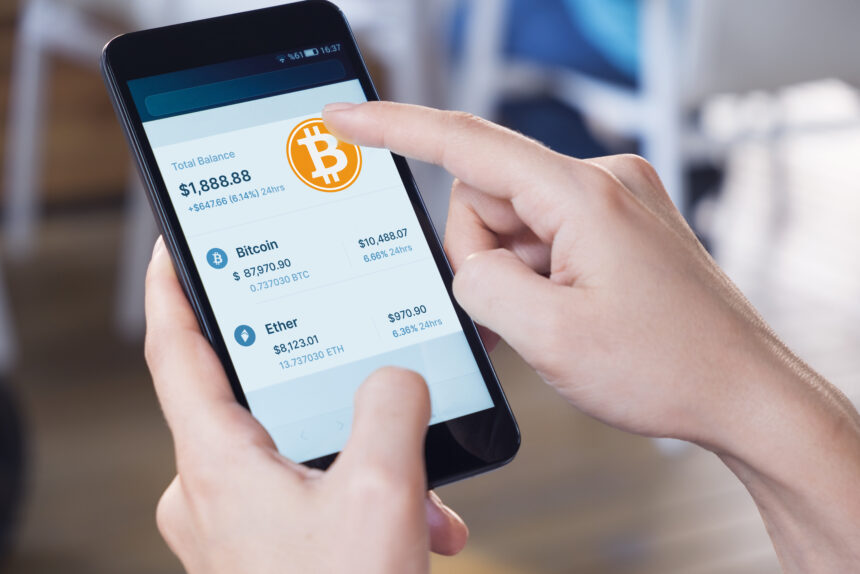
Bitcoin’s price has surged by an impressive 65% over the past year, solidifying its position as a significant global asset with a market capitalization of $2.2 trillion. This cryptocurrency, which evolved from being virtually worthless to a financial juggernaut in under two decades, has garnered attention from influential business leaders, politicians, and central bankers. Consequently, more investors are beginning to consider allocating funds towards Bitcoin, igniting speculation about its trajectory over the next year.
Several key catalysts have contributed to Bitcoin’s upward momentum. A notable factor has been the more favorable regulatory environment since former President Donald Trump took office, along with an influx of investments into popular spot Bitcoin exchange-traded funds (ETFs). Additionally, a recent development—the emergence of Bitcoin treasury companies—has gained considerable attention. These entities, such as Strategy, raise capital specifically to invest in Bitcoin, thus offering unique avenues for larger pools of capital to access the cryptocurrency.
As investors keep a close watch on these trends, the Federal Reserve’s monetary policy is expected to play a pivotal role in the coming year. The central bank recently reduced the fed funds rate by 0.25%, with projections suggesting the possibility of two more cuts by the end of 2025. Lower interest rates are generally seen as catalysts for economic stimulation and asset price elevation. Furthermore, the M2 money supply across the four largest global economies—the U.S., European Union, Japan, and China—saw a 7% increase in the past year, further bolstering liquidity in the global financial system. This increased capital availability has been instrumental in driving Bitcoin’s value.
However, the potential for economic downturns looms large. A severe recession could prompt investors to withdraw funds from assets like Bitcoin and seek refuge in safer options such as cash. The potential lasting impacts of trade policies from the previous administration may also weigh heavily on the global economy over the coming year.
Despite the volatility associated with Bitcoin, its historical performance lends a sense of optimism. While it has delivered annualized returns of 53% over the last five years, investors should approach future expectations with caution, recognizing that returns may not replicate past performance. Nonetheless, factors such as acceptance by major financial players and strategic moves by dominant economies suggest that Bitcoin is not merely a passing trend.
As market dynamics evolve, predictions remain inherently uncertain. While it is reasonable to anticipate lower returns moving forward, Bitcoin may still outperform traditional financial markets. Current sentiments suggest that Bitcoin could experience a further increase, with a potential price of approximately $139,000 within the next year, signifying at least a 25% rise from its current level of around $111,000.