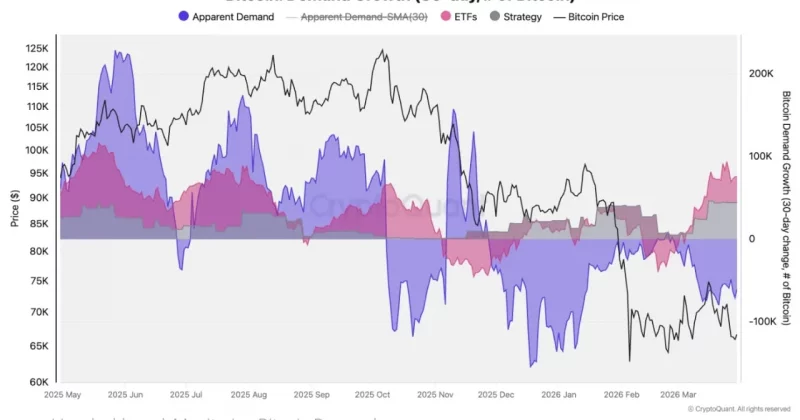
Bitcoin’s spot market is exhibiting troubling signs, as reported by CryptoQuant head of research Julio Moreno. The apparent demand for Bitcoin is contracting at a pace not seen since January 10, raising concerns among investors and analysts alike.
“Apparent demand” serves as a crucial measure of genuine buying interest, reflecting the net change between Bitcoin being acquired and sold on spot markets. Currently, this demand indicator remains sharply negative, suggesting that more Bitcoin is being offloaded than is being picked up by new buyers. Since late November 2025, apparent demand has consistently lingered in the negative range, hitting a low of approximately -91,000 BTC in April 2026, before experiencing a slight recovery to about -11,000 BTC in early May.
As of May 23, the data indicates that the rate of decline in apparent demand is accelerating once again. This trend mirrors the situation observed on January 10, a period marked by similar weakness in demand which led to erratic price movements.
The recent price rally, which saw Bitcoin surge around 20% in April 2026 from roughly $66,000 to $79,000, was propelled predominantly by perpetual futures trading rather than direct accumulation by spot buyers. Total open interest in Bitcoin reached $29 billion in early May, with Binance contributing around $9.03 billion of that figure. Such trading dynamics often raise questions about the sustainability of price increases driven by leverage rather than genuine market interest.
Profit-taking behaviors provide further context to this market situation. On May 5, unrealized profit margins stood at 17.7%, with daily realized profits peaking at 14.6K BTC on May 4. These indicators hint at a significant level of distribution, typically foreshadowing possible consolidation or price pullbacks.
A noteworthy shift is occurring in U.S. investor interest as well. The Coinbase Bitcoin Premium transitioned to a negative reading in late April 2026, suggesting that American buyers are reducing their participation relative to global counterparts. This shift has implications for market dynamics, indicating a potential cooling off among U.S. investors.
For current investors, these conditions raise critical questions about the market’s future trajectory. The elevated levels of realized profits indicate that informed investors are already adjusting their exposure. Although the earlier improvement in apparent demand is a positive sign, the latest trends suggest that any momentum towards recovery may be losing steam. For investors, a shift toward positive apparent demand would be a more reliable indicator of market stability, outweighing standard price targets or technical analyses.