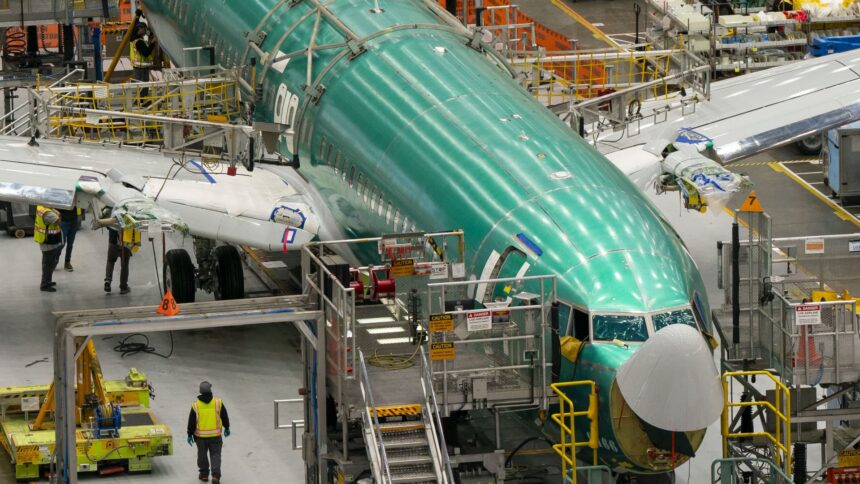
Boeing has reported impressive financial figures for the fourth quarter of 2025, surpassing Wall Street expectations as the company continues its recovery from several challenging years. The aerospace giant announced revenues of $23.9 billion for the quarter, marking a remarkable 57% increase compared to the same period in 2024, and beating analysts’ forecasts, which predicted $22.6 billion.
The robust performance was bolstered by a surge in airplane deliveries, with Boeing handing over 600 aircraft to customers in 2025, the highest number since 2018 and nearly double the deliveries made in 2024. The company’s cash flow hit $400 million, approximately double what Wall Street had projected, indicating a steady recovery trajectory.
CEO Kelly Ortberg expressed optimism about the future during communications with staff and in a recent interview with CNBC. He mentioned that while there are positive signs, higher expectations from stakeholders and customers come with this progress. Ortberg highlighted expectations for free cash flow between $1 billion and $3 billion for 2026, aiming for a target of $10 billion in the coming years, although he acknowledged that achieving this goal will take time and a systematic approach.
In terms of performance metrics, Boeing’s adjusted earnings per share stood at $9.92, a significant turnaround from the anticipated loss of 39 cents. The commercial airplane sector witnessed substantial growth as revenue climbed to $11.38 billion, outpacing analyst expectations of $10.72 billion, and reflecting a nearly 140% year-over-year increase. Meanwhile, Boeing’s defense unit reported a 37% revenue increase, totaling $7.42 billion for the quarter.
Despite this positive momentum, Boeing faces ongoing challenges, particularly with aircraft deliveries still affected by regulatory approvals and production delays. The company continues to work on recovering from the aftermath of the two tragic crashes of the 737 Max, which led to considerable operational hurdles and financial losses, totaling approximately $40 billion since early 2019.
In December 2025, Boeing delivered 63 jetliners, 44 of which were 737 Maxes. Competing with Airbus, which delivered 793 aircraft in 2025, Boeing secured 1,173 net orders, outpacing Airbus’s 889 orders. This growing demand indicates airlines are planning ahead, looking to the 2030s for fleet expansions and replacements.
While Boeing is on the path to recovery, investors are keenly awaiting more details from company leaders regarding the delivery schedules for key aircraft models that have faced delays, including the 737 Max 7 and Max 10, as well as the upcoming 777X. Approval from the Federal Aviation Administration remains a critical step for increasing production rates beyond the currently allowed 42 aircraft per month, following an incident that raised safety concerns.
Boeing reported a net income of $8.22 billion, equating to earnings of $10.23 per share, a stark contrast to the $3.86 billion loss reported the previous year. This positive shift has set the stage for an earnings conference call to further discuss these developments, as stakeholders remain eager for insights into the company’s future trajectory.