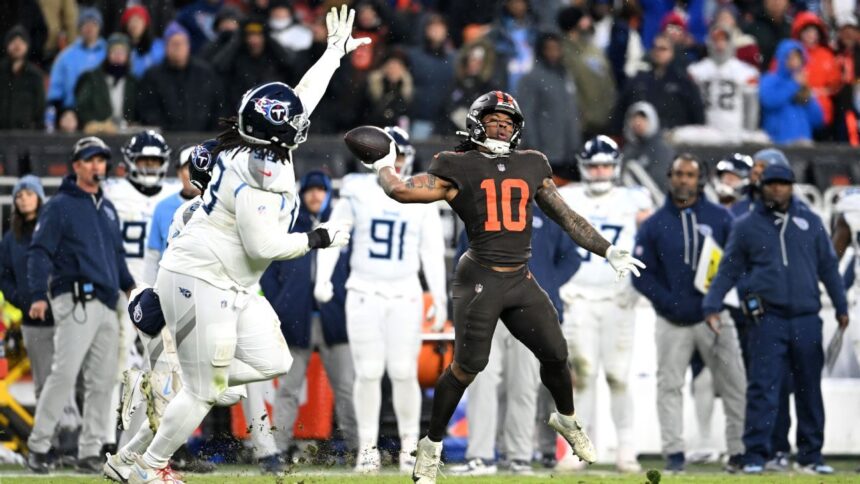
CLEVELAND — In a dramatic showdown against the Tennessee Titans, the Cleveland Browns faced a heartbreaking 31-29 defeat, a game that will be remembered not just for the close score, but for a crucial decision made during the final moments. Following the game, Browns head coach Kevin Stefanski chose to accept responsibility for a failed 2-point conversion attempt that could have changed the outcome.
The Browns found themselves in a dire situation, trailing 31-17 with just six minutes left on the clock. However, rookie quarterback Shedeur Sanders showcased impressive resilience, leading Cleveland to two late touchdown drives. Sanders first scored on a 7-yard run, but the following 2-point conversion attempt turned disastrous when he fumbled the center exchange.
Despite the setback, Sanders connected moments later with rookie tight end Harold Fannin Jr. for another touchdown, narrowing the Titans’ lead. Yet, in a surprising move, Sanders remained sidelined when the Browns opted for a Wildcat formation for the subsequent 2-point attempt. Rookie running back Quinshon Judkins took a direct snap but encountered confusion, mishandling the play as he attempted a pass across the field to rookie wide receiver Gage Larvadain, which ultimately fell incomplete.
Stefanski, who had recently handed over playcalling duties to offensive coordinator Tommy Rees, was hesitant to delve into the specifics of the failed conversion but took full accountability. “Not going to get into all the specifics but obviously it did not go as we thought it would,” he stated postgame. Despite Rees having a notable role in play selection, Stefanski insisted, “I make every call. … I’m responsible for all of it.”
The team had utilized the Wildcat formation throughout the season in short-yardage situations, successfully executing it multiple times. However, the decision to use it in that moment raised questions, especially following a previous struggle when Judkins was stuffed near the goal line in the first half.
Reflecting on the situation, Sanders expressed his desire to be in control during the critical moments. He acknowledged the unpredictability of football but was confident in the execution during practice leading up to the game. “If they knew it would pan out like that, I don’t think they would’ve did it,” he remarked, emphasizing a commitment to preparation despite the failure on the field.
Statistically, Sanders had an impressive outing, completing 23 of 42 passes for 364 yards, along with three touchdowns and one interception. Additionally, he contributed a rushing touchdown, marking him as the first Browns player since Derek Anderson in 2007 to achieve three passing touchdowns along with a rushing score in a single game.
Despite the valiant effort by Sanders and the team’s collective fight, the loss dropped the Browns to a disappointing 3-10, effectively eliminating them from playoff contention. Analysts noted that Cleveland’s chances of securing the No. 1 pick in the upcoming 2026 NFL Draft increased significantly from 6.6% to 14% following the defeat.
Stefanski praised Sanders’ determination, acknowledging the typical challenges faced by young quarterbacks. “He fought throughout the game, which we knew he would,” he remarked. “There are going to be ups and downs, and I thought there were some really, really, really good moments.” The coach’s affirmation of Sanders suggests a commitment to continue developing the rookie in hopes of nurturing his potential for future seasons.