









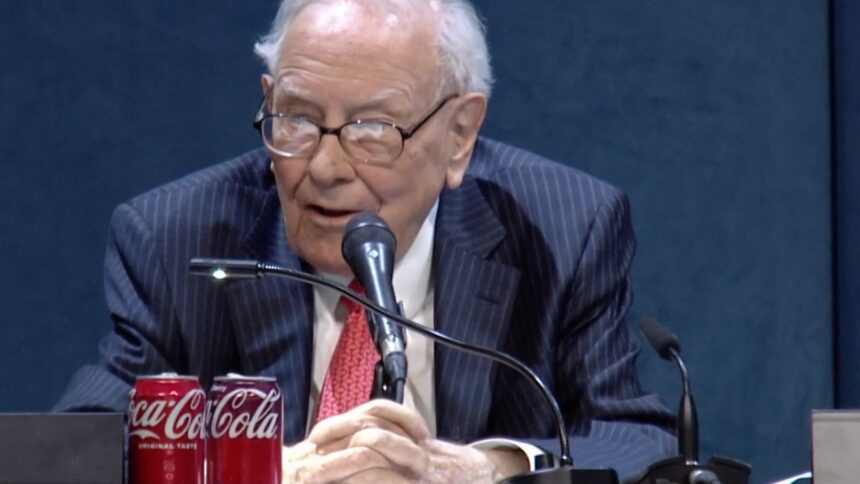
Warren Buffett has openly expressed his frustration regarding the dismantling of the Kraft Heinz merger, a strategic move he orchestrated nearly a decade ago. This has led many investors on Wall Street to speculate that Buffett may consider divesting his significant holdings in the company. During an interview on CNBC, the 95-year-old investment icon acknowledged that the merger may not have been as successful as anticipated and voiced his skepticism about the benefits of breaking the companies apart.
Buffett pointed out the additional costs of $300 million incurred from the split, the long duration the separation process will take, and the absence of a shareholder vote on the matter. Berkshire Hathaway, Buffett’s conglomerate, holds a substantial 27.5% stake in Kraft Heinz, making it the company’s largest shareholder. This merger, which involved the famous brands of Kraft mac-and-cheese and Oscar Meyer hot dogs, has proven to be a rare misstep for Buffett, as Kraft Heinz shares have plummeted nearly 70% since the merger in 2015. However, these losses have been somewhat offset by the billions in dividends that Berkshire has received over the years.
In its recent second-quarter earnings report, Berkshire wrote down its Kraft Heinz stake by $3.8 billion, raising concerns about the stock’s future. Buffett, who generally takes a passive investment approach, revealed that his successor, Greg Abel, had previously raised concerns regarding the breakup deal, but even this perspective was disregarded by the company. Buffett emphasized his commitment to acting in the best interests of Berkshire, stating that if approached to sell his shares, he would only entertain offers that equally benefit other shareholders.
Market analysts have noted that Buffett’s significant ownership stake could continue to exert pressure on Kraft Heinz shares. TD Cowen highlighted in a client note that Berkshire’s position poses a risk to the stock due to the potential of an exit. If Berkshire chooses to sell its shares in the open market, it will be required to disclose any sales within two business days, raising additional concerns among investors.
Don Bilson, head of event-driven research at Gordon Haskett, remarked that the uncertainties about the breakup plan, coupled with the potential for Buffett to sell his stock, are likely to contribute to ongoing challenges for Kraft Heinz shares. Following the formal announcement of the split and Buffett’s expressed disappointment, Kraft Heinz shares dropped by 7%. The company is now down 12% year to date after a 17% decline in 2024.
The planned split will re-establish Kraft Heinz as two separate entities: one focusing on sauces, spreads, and shelf-stable meals, and the other encompassing North American staples like Oscar Mayer meats, Kraft cheese singles, and Lunchables. Buffett originally partnered with Brazilian private equity firm 3G Capital to facilitate the merger between Kraft Foods and H.J. Heinz in 2015. Notably, 3G Capital quietly exited its Kraft Heinz investment in 2023 after years of reducing its stake as the company faced ongoing challenges.
JPMorgan noted that the perception of a shareholder overhang is increasingly coming to the forefront, suggesting a complex landscape for Kraft Heinz moving forward.