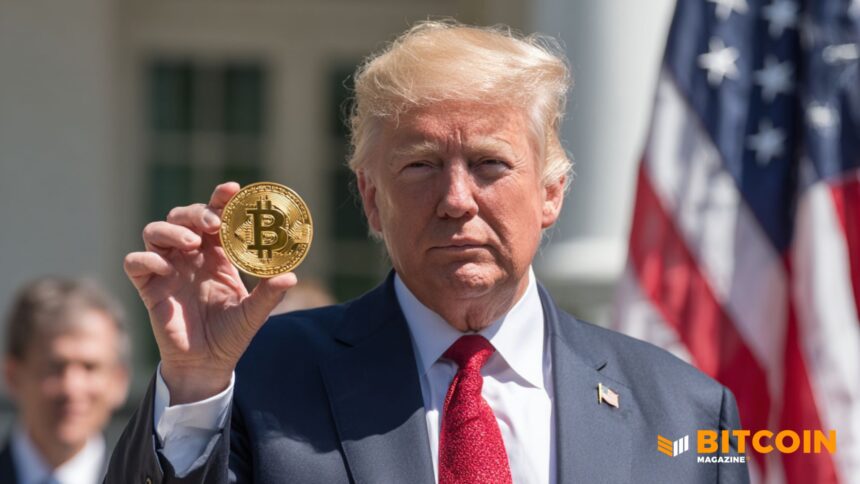
Cathie Wood, the founder of ARK Invest, recently suggested that the political landscape could significantly influence the U.S. government’s approach to Bitcoin acquisition. During a discussion on ARK’s Bitcoin Brainstorm podcast, Wood emphasized that cryptocurrency has evolved into a crucial political issue for Donald Trump as the 2026 midterm elections approach. This growing political dimension raises the possibility that the federal government may transition from merely holding confiscated Bitcoin to purchasing it for a national strategic reserve.
According to Wood, Bitcoin played a substantial role in Trump’s initial presidential victory, indicating that he may have strong incentives to maintain a positive relationship with the crypto industry. “The most important one is that he doesn’t want to be a lame duck. He wants to have another one or two productive years,” she stated, suggesting that Trump views cryptocurrency as a pathway to future opportunities.
The U.S. Bitcoin reserve was established through an executive order shortly after Trump began his second term, which also set up a digital asset stockpile and an interagency working group led by Special Advisor for AI and Crypto, David Sacks. To date, the reserve has only been filled with Bitcoin obtained through criminal forfeitures, which Trump has committed to not selling.
Wood highlighted that there appears to be reluctance within the administration to actively buy Bitcoin for the strategic reserve. However, she proposed that this stance may change, citing an original goal to accumulate one million Bitcoins. “I actually think they will start buying,” she noted.
As the crypto sector has become a more politically organized force, it has influenced election cycles through substantial contributions from industry-backed political action committees and endorsements from high-profile executives. Wood herself has been an active supporter of Trump, who has also engaged with the crypto sector by hosting related events and receiving contributions from major firms like Coinbase and Tether.
On the policy front, Trump has signed executive orders that formalize the Bitcoin reserve and related legislative efforts, including the GENIUS Act aimed at establishing stablecoin regulations. A report from Sacks’ working group outlined recommendations like empowering the Commodity Futures Trading Commission to oversee spot markets for non-security digital assets. The report reaffirmed that the Bitcoin reserve would be managed by the Treasury Department and funded initially through forfeited assets, calling on the Treasury and Commerce Departments to explore “budget-neutral” methods for acquiring additional Bitcoin.
Wood suggests that while the current funding model poses challenges, these obstacles are manageable. She frames government purchasing of Bitcoin as a potential market turning point, especially given that nearly 20 million of the maximum 21 million Bitcoin supply has already been mined. She remarked, “If we get the U.S. not just adding confiscated Bitcoin to a strategic reserve but actually out there buying, that would set off what we’re all waiting for — the scarcity value to reassert itself.”
This development signals the intertwining of cryptocurrency and political strategy as the landscape shifts in anticipation of future electoral cycles, highlighting the potential for increased government involvement in the market.