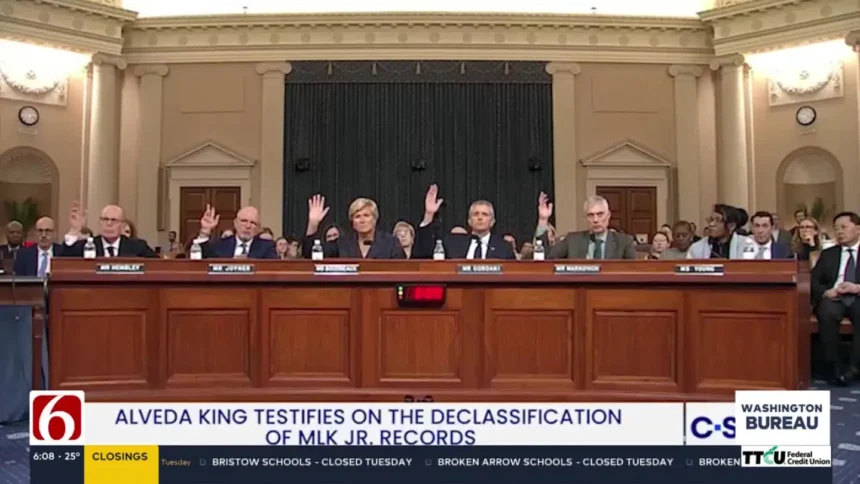
In a critical session last Thursday, top executives from major health insurance companies, including United Health Group, CVS Health, The Cigna Group, Elevance Health, and Ascendiun, appeared before two House committees in Washington, D.C. The focus was on addressing the escalating costs of health care that have placed an increasing burden on American families. Chairman Jason Smith (R-MO) underscored the gravity of the situation, stating that health care has become “increasingly unaffordable” for the average family. He noted that the cost of an average family insurance plan has surged to around $27,000, while deductibles for individuals can exceed $3,000, with family deductibles soaring as high as $10,000. Smith pointed out that premiums for Obamacare plans have risen by a staggering 80 percent over the past decade, leaving families exposed to out-of-pocket maximums surpassing $20,000.
Smith explained that these issues are not confined to those using the health exchange, as the private employer market, covering over 160 million Americans, is also witnessing significant premium increases. He highlighted that health spending in America has tripled from $1.4 trillion in 2000 to an alarming $5.3 trillion today, equating to nearly one-fifth of the nation’s economy. “In short: Americans are paying more for coverage than ever before while getting less peace of mind and less access to care in return,” asserted Smith. He criticized insurers for not effectively controlling costs and navigating patients through the complex health care landscape.
Ranking Member Richard Neal (D-MA) offered a contrasting perspective, framing the hearing as an opportunity for the ruling party to deflect blame for rising health care costs. He lambasted the Republican majority for what he termed “damage control,” suggesting that their actions have exacerbated the crisis rather than alleviating it. Neal criticized the Republicans for failing to extend expanded Affordable Care Act (ACA) tax credits, a move he argued would have provided immediate relief to many Americans.
Oklahoma Congressman Kevin Hern (R-OK1), also a member of the Ways and Means Committee, expressed his expectations for actionable outcomes from the testimony of the CEOs. Hern highlighted the significant increases faced by Americans enrolled in ACA plans, projected to rise by approximately 26%. He pointed out that extending premium tax credits would only marginally mitigate such increases and that many states have reported staggering premium hikes of 40 to 50 percent. Hern emphasized the need to bring patients and consumers back into focus within the health care model, challenging the notion that personal health behaviors could influence insurance costs.
The hearing marked the beginning of a broader inquiry into the health care sector, seeking to understand why costs continue to skyrocket and what solutions might be proposed to lower them for American families. With bipartisan frustration evident regarding the spiraling costs of health care, it remains to be seen how discussions will unfold and whether tangible measures will emerge from these critical deliberations.