Chancellor Rachel Reeves faces a pivotal moment as she prepares to unveil a budget aimed at balancing the interests of Labour MPs, voters, businesses, and bond markets. With an expected tax-heavy announcement looming, Reeves must navigate significant economic pressures that include rising borrowing costs and a recent downgrade in productivity forecasts from the Office for Budget Responsibility (OBR).
Current fiscal constraints have severely limited the chancellor’s room for maneuver, diminishing headroom from a manageable £9.9 billion to possibly needing over £30 billion in tax increases and spending cuts to restore stability. Investors are especially attuned to this budget, watching to see if Reeves can reassure bond markets and stave off higher yields that could arise from fears of increased debt.
While the ideal scenario would involve enhancing fiscal headroom—potentially up to £20 billion—Reeves appears reluctant to institute major income tax increases, having lost some political appetite for manifesto-breaking moves. Instead, she may offer a variety of smaller tax increases, including measures affecting businesses and making adjustments to welfare policies such as the two-child benefit cap and energy bill support.
Key stakeholders are apprehensively eyeing how Reeves will achieve necessary fiscal balance. Some analysts suggest that maintaining stability will be crucial to avoid spooking bond traders; failure to deliver may lead to increased yields and further complicate government debt management. Emily Wilson of Saxo Bank highlights the potential fallout if market reactions sour, indicating that the combined effects of fiscal tightening and a slowdown in growth could present a volatile situation.
As the chancellor prepares her budget strategy, she has acknowledged the widespread economic frustrations affecting families, citing a duty to address entrenched inequalities without reverting to austerity measures. In a pre-budget address, she articulated her goals of reducing living costs, hospital waiting times, and the national debt, while committing to proactive policymaking to facilitate economic resilience.
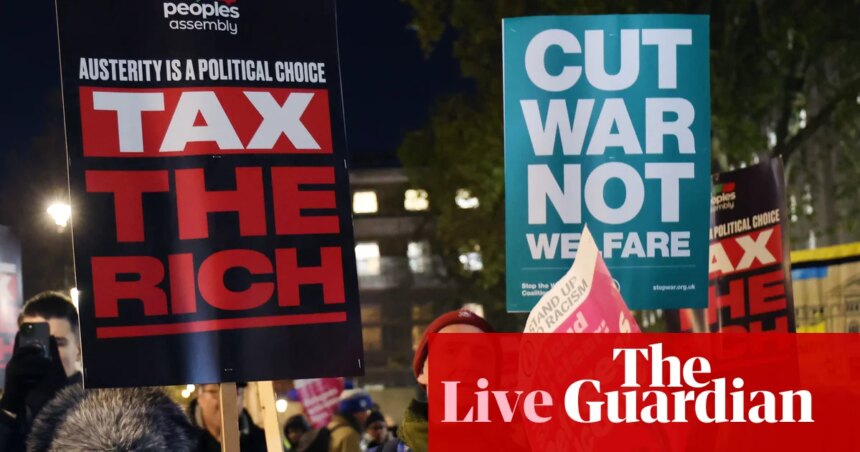
Protests leading up to the budget are reflective of the public’s increasing anxiety over potential austerity measures. Various groups, including farmers and activists advocating for social equity, have gathered to voice their concerns, putting pressure on the government to avoid fiscal restraint that excludes essential public services.
In anticipation of the budget announcement slated for 12:30 p.m. GMT, economic sentiments are mixed. The pound shows slight increases against both the US dollar and euro, signaling a cautiously optimistic market reaction. Analysts suggest that a strong approach emphasizing fiscal responsibility combined with moderate tax reforms might stabilize confidence in sterling and the bond market.
The new minimum wage increases announced earlier, alongside potentially significant tax rises to address current fiscal challenges, have stirred conversation in economic circles. While many workers stand to gain from these changes, there are warnings that substantial wage hikes could strain businesses, particularly in the hospitality sector, which may have to respond with higher consumer prices.
As the chancellor not only contends with the complexities of economic management but also the internal dynamics of her party, her success in this budget could have far-reaching ramifications for her leadership and the broader financial stability of the UK economy. All eyes will be on Westminster today, as stakeholders await the specifics of Reeves’ budget plan and its implications for the fiscal landscape.