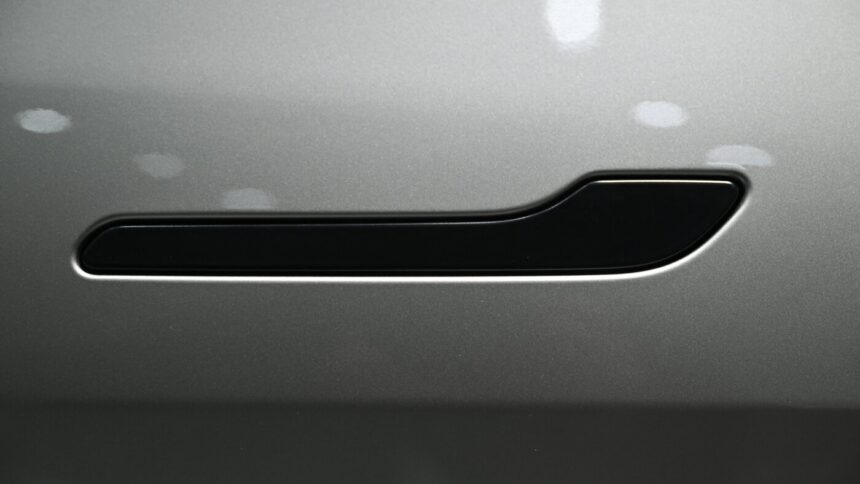
In a significant move aimed at enhancing road safety, China has announced a forthcoming ban on hidden door handles for vehicles sold within its borders, making it the first country to implement such a regulation. Starting in 2027, all cars must feature door handles that can be opened mechanically from either side, addressing safety concerns that have arisen from the increasingly popular minimalist designs adopted by many automakers, including Tesla.
The ban follows increasing scrutiny of electric vehicle designs that feature flush-mounted door handles, which are often electrically powered and only activate when they detect an approaching driver. While these designs have been praised for their aerodynamic benefits and sleek appearance, they pose a serious safety risk: in the event of a crash or battery malfunction, these handles may fail to function, preventing rescuers from accessing the vehicle and trapping occupants inside.
An investigative report by Bloomberg highlighted the potential dangers associated with Tesla’s design, noting instances where first responders were forced to break windows to reach victims due to inoperable door handles. Following these revelations, the National Highway Traffic Safety Administration (NHTSA) in the U.S. launched an investigation into reports of 2021 Tesla Model Y door handles failing to open. In response to these concerns, Tesla’s chief designer stated that the company is actively working on redesigning its door handles.
The NHTSA’s investigation is not limited to Tesla; it is also looking into similar issues regarding the Dodge Journey and evaluating petitions concerning potential hazards associated with the Tesla Model 3’s interior door releases. A troubling trend has emerged, with Bloomberg identifying at least 15 fatalities linked to crashes where Tesla doors failed to open, raising alarms about the overall safety of electronic door designs.
The concern over hidden handles isn’t exclusive to Tesla. Numerous manufacturers, including Audi, BMW, Chevrolet, Ford, and others, have incorporated similar electronic handles into their vehicles. The situation is similar in China, where many top electric vehicle makers have adopted these designs. A tragic incident involving a Xiaomi vehicle highlighted the dangers when a driver found themselves trapped due to inoperable doors, further intensifying the discourse around vehicle safety standards.
In response to these growing safety concerns, China’s Ministry of Industry and Information Technology has stated that the new regulations will mandate that exterior door handles must enable users to mechanically open car doors under all circumstances, including emergencies like battery fires. Additionally, the positioning of interior door releases must be such that they are easily accessible and visible to passengers, addressing criticisms that some manual releases are difficult to locate in urgent situations.
These regulations will impact global automakers selling in China, requiring them to adapt their designs to comply with the new safety standards. However, the changes are unlikely to affect the U.S. domestic market directly, given ongoing trade policies and tariffs that create barriers between the two automotive markets.
Pressure is also mounting in the U.S. to address similar safety risks. Recent legislative proposals introduced in Congress aim to require automakers to provide fail-safe manual releases for car doors and ensure that rescue workers can enter vehicles from outside in emergencies.
As the automotive landscape evolves, the push for enhanced safety measures underscores a growing awareness of the limitations of current vehicle designs and the need for regulations that prioritize the well-being of occupants in emergency situations.