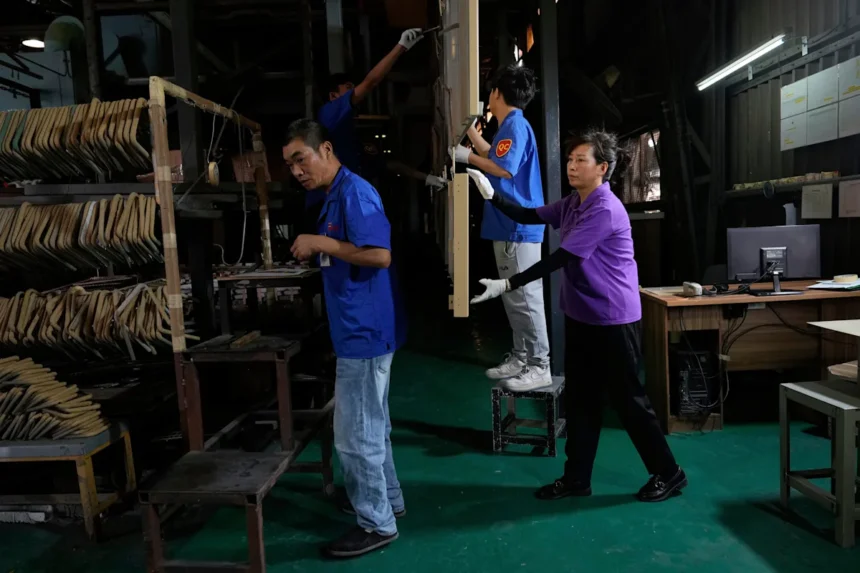
China’s manufacturing sector continues to face significant headwinds, as evidenced by the official survey released this weekend, which shows that factory activity has contracted for the eighth consecutive month in November. The National Bureau of Statistics reported a slight uptick in the manufacturing purchasing managers index (PMI), which rose to 49.2 in November from 49 in October. However, with a PMI reading below 50 indicating contraction, this marginal increase underscores ongoing challenges for the Chinese economy even amidst a recent trade truce with the United States.
The situation underscores a complex economic landscape, as expectations surrounding a U.S. tariff cut earlier this month raised hopes for enhanced competitiveness of Chinese exports in the U.S. market. Following a meeting between U.S. President Donald Trump and Chinese leader Xi Jinping on October 30, optimism briefly surged regarding a potential boost in exports and manufacturing activities. However, it remains uncertain if these conditions have translated into tangible momentum for Chinese exports following the trade discussions.
Despite this optimism, several factors persistently dampen the economic outlook. A protracted downturn in China’s property market, characterized by declining home prices, continues to erode consumer confidence, thereby negatively impacting real estate investments. Additionally, heightened price competition in several sectors, including the automotive industry, is putting further strain on many businesses operating within the country. Economists are stressing the need for expanded government policy support to stimulate economic growth under these challenging circumstances.
Lynn Song, chief economist for Greater China at ING bank, highlighted in a recent report that policymakers appear to be hesitant in providing further economic support. Previous measures, such as trade-in subsidies for consumer appliances and electric vehicles, have been introduced to boost consumption but are now facing phase-out. Analysts warn that this reduction in incentives could lead to a decline in sales and demand, further straining the domestic market for manufactured goods.
The mixed signals concerning domestic demand are echoed by Zichun Huang, a China economist at Capital Economics, who noted that the fading impact of consumer goods trade-in policies may contribute to a slowdown in domestic consumption.
In terms of overall economic goals, Chinese officials have set a target of approximately 5% growth for the entire fiscal year of 2025. The economy recorded a growth rate of 4.8% in the third quarter of this year, signaling a need for careful management of economic policies to meet this goal. Economist Lynn Song indicated that achieving this year’s growth target may necessitate minimal additional support, suggesting that the path ahead remains fraught with uncertainty.