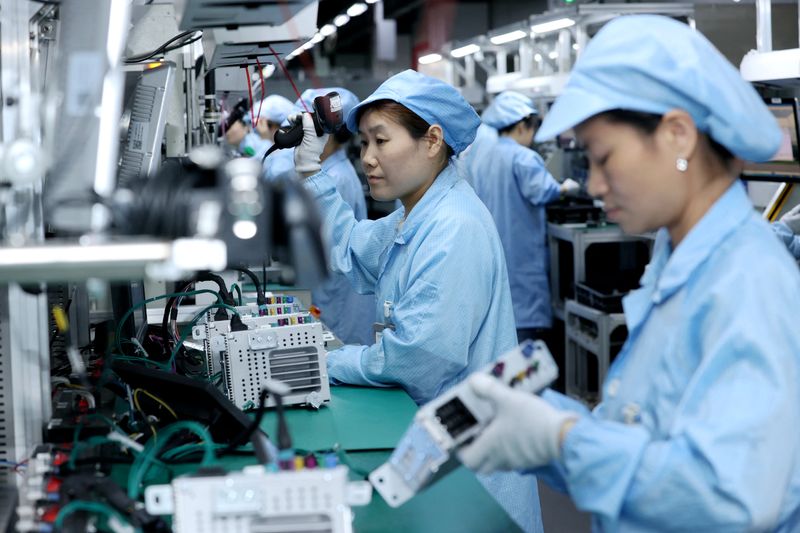
China’s manufacturing sector exhibited significant growth in February, recording its fastest expansion since December 2020, as revealed by a private-sector survey conducted by S&P Global. The RatingDog China General Manufacturing Purchasing Managers’ Index (PMI) climbed to 52.1, an increase from January’s 50.3, surpassing analysts’ expectations of 50.2. This reading indicates a notable rebound, as the PMI scores above the critical 50 mark signify growth, while scores below indicate contraction.
In contrast, an official survey released on the same day pointed to a contraction in factory activity for the second consecutive month. Analysts suggest that the discrepancies between the two surveys can be attributed to differences in the scope of coverage and the profiles of respondents participating in the studies.
The private survey underscored a surge in demand for Chinese manufactured goods, with new orders increasing for the ninth straight month and at the highest rate since late 2020. Output growth also reached its peak since June 2024, reflecting a robust recovery. Particularly noteworthy was the increase in overseas demand, with new export orders showing the most significant rise since September 2020. A seller of outdoor furniture in eastern China disclosed anonymously that their orders had surged by 30% to 40% in January compared to the previous year, with continued growth into February.
Industry experts predict that the manufacturing PMI will likely sustain a moderate expansion in the near term. Yao Yu, founder of RatingDog, remarked on the importance of consistent demand and the need for this confidence to translate into increased hiring and investment.
The economic landscape for China may also be positively influenced by recent developments regarding U.S. tariffs. Following a Supreme Court ruling against former President Donald Trump’s emergency tariffs, analysts believe this could provide China with a competitive edge as trade relations evolve. The U.S. Trade Representative’s office announced intentions to promote a more balanced and fair trading approach with China, alongside efforts to monitor compliance with the trade truce established last year.
The sentiment among Chinese manufacturers improved significantly in February, reaching the highest level of optimism in 11 months, according to the S&P survey. Despite an uptick in backlogs—typically seen during the peak of the Chinese New Year when many factories suspend operations—hiring remains cautious, with employment seeing only a marginal rise for the second month in a row, marking the first back-to-back increase since mid-2021.
As demand strengthened, manufacturers escalated their purchasing activities, leading to heightened cost pressures. The inflation rate for input prices accelerated to its fastest pace since June 2022, with respondents highlighting rising metal prices. Consequently, manufacturers increased their output prices for the second consecutive month, with inflation rates for charges reaching a 15-month high.
Looking ahead, China is poised to announce significant economic targets for 2026 during the upcoming annual parliamentary meeting, set to commence shortly. Market observers are also keenly anticipating the release of the next Five-Year Plan, which will outline directions for the country’s economic development, technological innovation, and green transition initiatives.