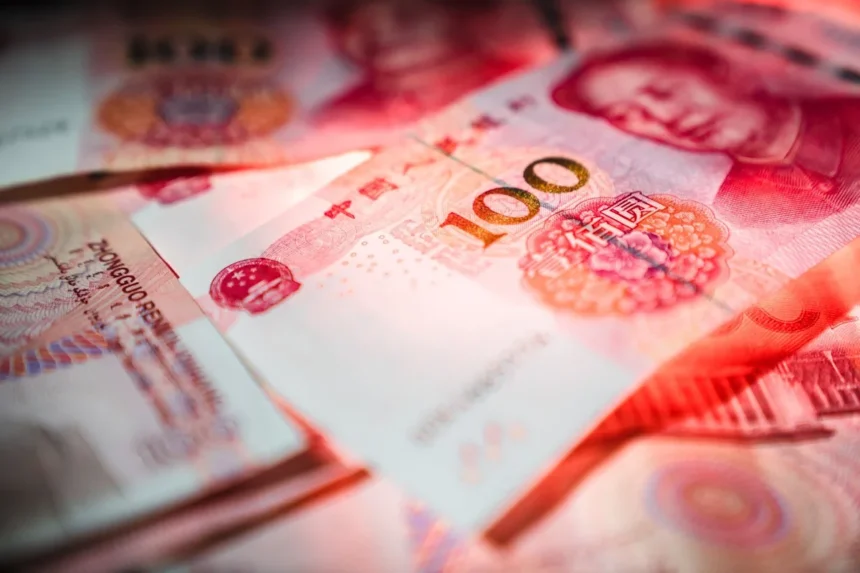
China has set its daily reference rate for the yuan at 7.0733 per dollar, a level significantly weaker than expectations from traders and analysts. This decision by the People’s Bank of China (PBOC), which is 164 pips lower than the average estimate in a recent Bloomberg survey, suggests that the central bank is actively working to moderate the yuan’s appreciation. This gap between the fixing and forecasted rates is notably the largest since February 2022.
The PBOC is attempting to find a balance in the yuan’s value, reflecting a more favorable sentiment toward Chinese assets and a weakening US dollar, while simultaneously ensuring that the country’s exporters remain competitive. A surge in the yuan could potentially undermine the competitiveness of Chinese products in international markets. As Fiona Lim, a senior foreign-exchange analyst, noted, the PBOC seems to be deliberately curbing the pace of the yuan’s rise, even as there are fundamental reasons for it to appreciate.
Thursday’s fixing was notably below the forecasts of all ten estimates provided in the Bloomberg survey, yet it showed slight strength over the previous session, in line with the dollar’s drop. To further manage the yuan’s gains, there are indications that state-owned banks have been actively buying dollars, effectively countering the currency’s rally.
In recent weeks, the yuan had been edging closer to the significant psychological level of 7, buoyed by a rise in local stock markets and a depreciation of the dollar amid concerns over the US fiscal situation. Increased momentum was also noted after an unexpected phone call between US President Donald Trump and Chinese President Xi Jinping, alongside speculations of a potential Trump visit to China in the coming year.
Economists expect that while the level of 7 may not be reached this year, it is likely to be tested at some point next year. Lynn Song, the chief economist for ING, highlighted that maintaining currency stability is crucial for fostering a dependable environment for foreign trade and investment, especially in an increasingly uncertain market.
Trading activity has shown hedge funds selling dollars against the offshore yuan and making strategic moves in the options market that anticipate declines in the dollar-yuan pairing. The recent strengthening of the yuan reflects a considerable shift since the US-China trade war years of 2018-2019, during which the Chinese economy was heavily dependent on American consumers. In contrast, China has diversified its export markets toward the Global South and solidified its position in essential supply chains.
As of Thursday morning, the yuan experienced a slight decline of 0.1% in onshore and overseas trading despite reaching one of its highest values against the dollar in over a year. While it has been trading near its strongest levels in a basket of currencies since April, its real effective exchange rate remains close to its lowest since 2011, according to the Bank for International Settlements. Analysts emphasize that while the authorities aim to manage the pace of the yuan’s appreciation, they are not attempting to halt it altogether, favoring a more gradual increase amid anticipated foreign-exchange volatility.