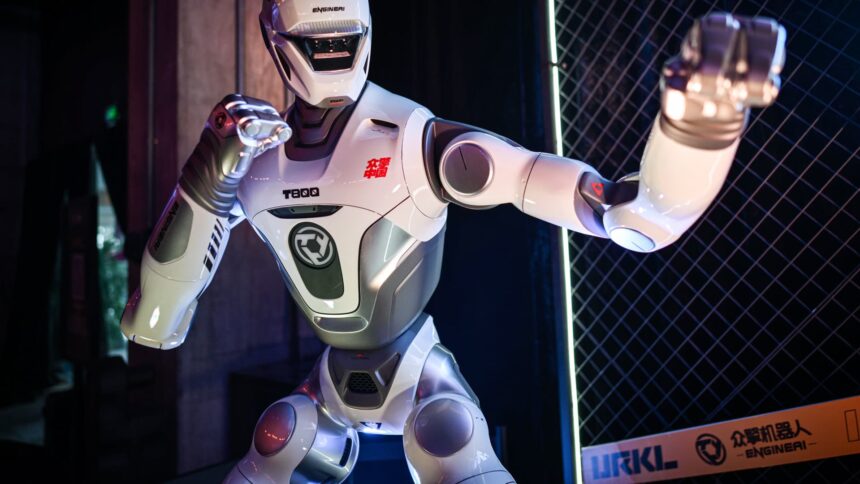
Chinese humanoid robots are gaining significant attention following their captivating performance at the 2026 Spring Festival Gala in Beijing, celebrated as one of the world’s most-watched television events. Videos from the gala, which took place on February 16, show robots from various startups executing impressive kung fu techniques, choreographed dances, and intricate gymnastics. This year’s showcase starkly contrasts with the 2025 gala, where robots performed a less impressive folk dance.
In the past year, skepticism surrounding humanoid robots has lessened, particularly after their underwhelming appearances at events like a marathon that highlighted their technical limitations with numerous stumbles and malfunctions. Now, commentators are expressing both admiration for the advancements showcased and concern about their implications for the labor market and the ongoing U.S.-China technology competition.
Analysts note that while humanoid robots are still evolving, the progress made recently is significant. Reyk Knuhtsen, an analyst at SemiAnalysis, highlighted the robots’ increased fluidity and capability, suggesting they might reach superhuman performance levels in the future. China’s head start in the humanoid robotics sector has positioned it ahead of the United States; analysts from Barclays indicate that China accounted for over 85% of the approximately 15,000 humanoid robot installations reported in 2025.
The unique advantage that China holds is its comprehensive robotics supply chain, which includes everything from rare earth materials to advanced mechanical components. Leading companies in this field, such as Unitree, aim to capitalize on this advantage, setting ambitious goals for their production and sales in 2026. The CEO of Unitree noted expectations of shipping between 10,000 and 20,000 units this year, reflecting the enhanced capabilities demonstrated in their recent routines.
While production costs for Chinese robots remain competitive, with a base price of $13,500 for Unitree’s G1 humanoid model, U.S. counterparts like Tesla’s Optimus are projected to have higher production costs. Although there are anticipations of increased output from American manufacturers, analysts believe they will struggle to catch up to China’s established ecosystem.
Despite the impressive displays at the Spring Festival Gala, analysts remind us that substantial technical challenges remain. Improvements in artificial intelligence (AI) and mechanical systems are essential for robots to perform tasks in complex, human-centric environments, such as healthcare or household duties. As Knuhtsen pointed out, the true value of humanoid robots will hinge on their AI capabilities rather than mere production numbers.
The advancements in dexterity and task execution demonstrated in Beijing signal promising potential for economic applications, particularly in roles demanding precision and skill. Analysts foresee that as these technologies evolve, their role in everyday life may grow, but continued progress in AI performance will ultimately determine their success.