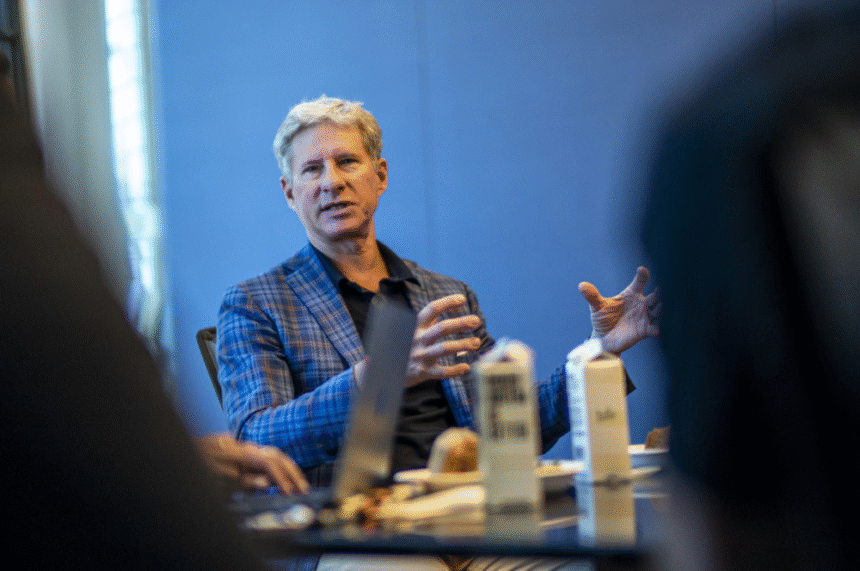
Chris Larsen, a pivotal figure in the intersection of technology and consumer finance, co-founded Ripple Labs in 2012, establishing a groundbreaking cross-border payments protocol that saw its XRP token rise to become the second-largest cryptocurrency by market capitalization by 2014. His entrepreneurial journey, which has spanned over three decades, began in San Francisco, where he pursued a B.S. in international business and accounting before completing an MBA at Stanford. Prior to Ripple, Larsen founded E-Loan and Prosper Marketplace, demonstrating a consistent commitment to consumer-centric financial technologies.
E-Loan, launched in 1996, was notable for providing consumers with free access to their FICO scores, significantly democratizing financial information that had been controlled by lenders. Following its sale to Banco Popular in 2005, Larsen went on to establish Prosper Marketplace in 2006, a peer-to-peer lending platform allowing individuals to lend directly to one another without bank involvement. These innovations positioned Larsen as a notable disruptor of traditional financial institutions.
In 2012, Larsen co-founded OpenCoin, which later became Ripple Labs. The Ripple protocol, which enables seamless and efficient money transfers, aimed to integrate with existing financial institutions rather than operate outside them. This strategic direction led to partnerships with over 100 financial entities, including major names like American Express and Santander. Ripple’s innovative consensus mechanism was lauded for being faster and more energy-efficient than Bitcoin’s proof-of-work system.
Larsen’s tenure at Ripple faced significant challenges, particularly with the SEC lawsuit initiated in December 2020. The SEC alleged that Ripple and its executives, including Larsen, conducted unregistered securities offerings through XRP sales. The case became a landmark regulatory battle, raising important questions about the application of U.S. securities laws to digital assets. As legal proceedings unfolded, the courts clarified the distinction between different types of XRP sales. The lawsuit concluded with a settlement for $50 million in June 2025, ending a four-year legal struggle and marking a crucial moment for the cryptocurrency industry.
In addition to his role at Ripple, Larsen has been active in political advocacy. He co-founded Grow California, which secured approximately $40 million to support business-friendly legislation in the state. His political contributions included over $11 million in XRP donated to Vice President Kamala Harris’s 2024 presidential campaign, making him one of the largest donors in the crypto sector that election cycle. Furthermore, Ripple Labs contributed significantly to Fairshake, a crypto-backed PAC involved in future elections.
Larsen has also made noteworthy philanthropic contributions. Notably, he and his wife, Lyna Lam, donated $25 million in cryptocurrency to San Francisco State University in 2019, which subsequently led to the renaming of its business school. During the COVID-19 pandemic, they contributed $1 million to several food banks in San Francisco. His philanthropy extends to funding for various urban revitalization projects and the establishment of the Larsen-Lam Climate Change Foundation, which focuses on sustainable initiatives.
As of November 2025, Ripple was valued at approximately $40 billion, following a substantial funding round, and Larsen’s holdings include an estimated 2.7 billion XRP tokens, reflecting his significant stake in the company. Throughout his career, Larsen has shaped the landscape of the financial technology sector through innovation, regulatory engagement, and a commitment to consumer advocacy, making him a leading figure in the evolving world of cryptocurrency.