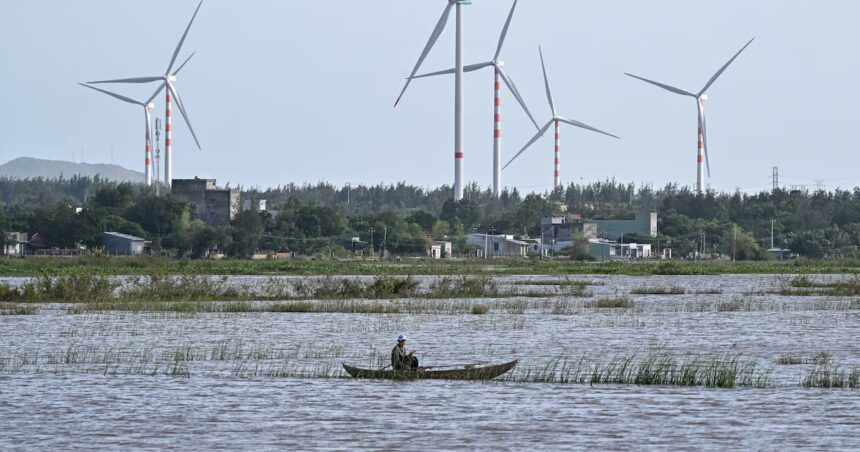
A fisherman in Vietnam’s central Gia Lai province worked alongside wind turbines on November 5, 2025, as the region prepared for the impending arrival of Typhoon Kalmaegi. This scene highlights the intersection of traditional livelihoods and the burgeoning clean energy sector, particularly important amid growing concerns over climate change.
In recent analysis, the S&P Global Clean Energy Index has shown impressive performance, outpacing major stock indices like the S&P 500, the Nasdaq 100, and the MSCI World Index. This trend is noted by experts from Jefferies who have labeled the current state of green technology as the “glory days,” marking a significant shift in investment patterns despite adverse political climates.
Critics of the U.S. government’s environmental policies argue that the administration has weakened regulations and subsidized fossil fuel industries at the expense of renewable energy initiatives. However, the demand for clean energy continues to rise, fueled by a surge in artificial intelligence technologies which, while controversial, have created new market opportunities within the energy sector.
Bloomberg News reported that leading stocks in the clean-energy index are also aligned with developments in AI, suggesting that investment is not solely based on environmental considerations but also on perceived economic potential. In contrast, stocks associated with climate disaster preparedness—which includes sectors like hardware retail, insurance, and waste management—have outperformed the broader market by a significant margin over the past five years.
These two categories of investment, clean energy and climate adaptation, represent different strategies in response to climate change. Prominent investor Bill Gates is actively involved in both areas, having launched initiatives with the All Aboard Coalition aimed at raising substantial funds for clean technology. Despite a decline in U.S. investments in the second half of 2024, European investments in renewables surged, indicating a robust global movement towards sustainable energy.
Globally, investments in fossil fuel alternatives reached a staggering $2.1 trillion in the previous year, with record-breaking sums channeled into renewables like wind and solar. Notably, China has emerged as a leader in renewable energy investments, claiming half of the global total so far in 2025. This trend raises concerns about geopolitical influence as the U.S. administration continues to push back against wind and solar initiatives.
In a historical milestone, renewables have begun to outproduce coal for electricity generation on a worldwide scale. While fluctuations in coal mining stocks remain evident, the economic advantages of solar and wind power suggest a long-term decline in coal dependency may be imminent.
As climate risks increasingly correlate with higher capital costs for businesses, even amid ongoing climate change skepticism, financial markets appear to be adjusting to this reality. This adaptability may pave the way for more significant shifts in investment and policy as the world grapples with environmental challenges.