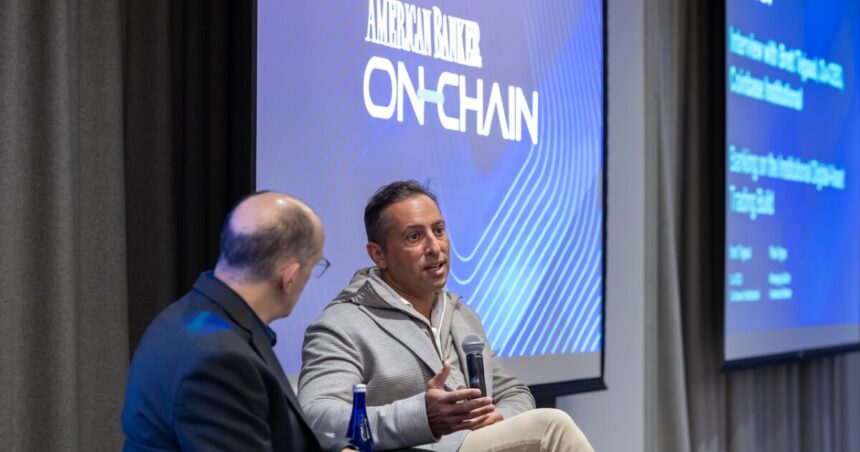
Coinbase is intensifying its focus on the institutional sector, aiming to enhance its trading infrastructure for banks and financial institutions. As institutional investors increasingly demand continuous, around-the-clock liquidity, the pressure mounts on banks to upgrade their technological capabilities to retain their clients.
Brett Tejpaul, co-CEO of Coinbase Institutional, highlighted this evolving landscape during his recent appearance at American Banker’s On-Chain Executive Summit in New York. He noted that institutional clients expect to trade at any time and across a wide range of assets. “The technology stack that you have doesn’t work” for this increased demand, Tejpaul stated, indicating a need for substantial upgrades within traditional banking infrastructures.
Tejpaul, drawing from his two-decade experience in high-ranking positions at major financial institutions like JPMorganChase and Barclays, explained that Coinbase’s technology could help address this challenge. He likened the situation to a pivotal shift in service provision: “This is like our pivot from Amazon to AWS,” he said, referring to how the company’s established systems could be leveraged by banks looking to operate more effectively and cost-efficiently in the digital finance space.
In his outlook, Tejpaul expressed a strong interest in collaborating with banks and hedge funds to develop innovative trading strategies. He expects a growing recognition among financial institutions of the advantages that advanced technology in digital assets can provide. “We have places like JPMorganChase and Standard Chartered that have made huge investments… to activate their own native capabilities,” he remarked, emphasizing that while he is not critical of the current banking framework, he envisions a transformation toward a more robust financial system.
The ongoing shift in the financial landscape was a central theme at the American Banker’s On-Chain Executive Summit, which focuses on the integration of digital assets into traditional finance. As the demand for versatile trading options and improved liquidity persists, the need for banks to adapt to this new reality appears increasingly urgent.