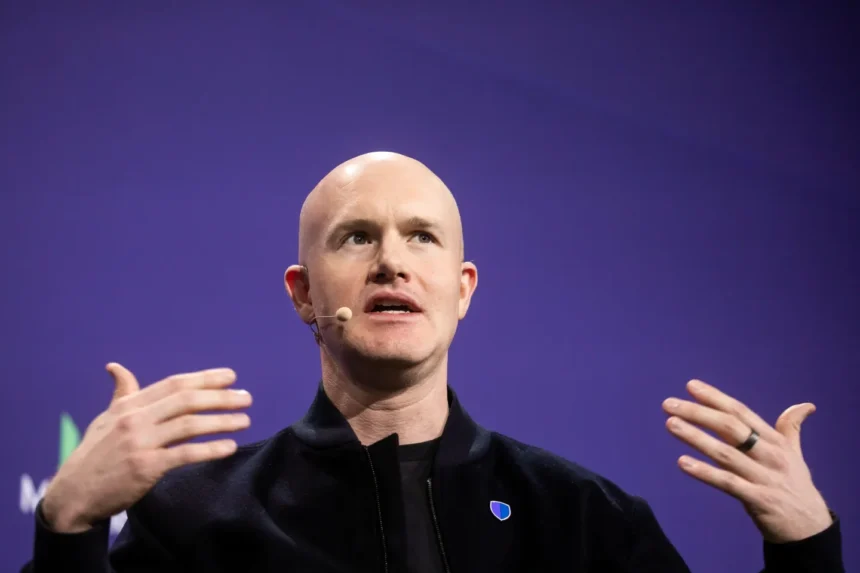
Coinbase CEO Brian Armstrong has articulated an ambitious vision for the cryptocurrency exchange, aiming to evolve into a comprehensive “super app” that could potentially replace traditional banking institutions. In a recent interview with Fox Business, Armstrong explained that the company is focused on providing a complete suite of financial services—including payments, credit card offerings, and rewards programs—rooted in a crypto-centric infrastructure.
Armstrong asserted, “Yes, we do want to become a super app and provide all types of financial services. We want to become people’s primary financial account, and I think that crypto has a right to do that.” He emphasized the challenges posed by current banking systems, particularly pointing out high fees associated with credit card transactions. “It kind of boggles my mind. Like, why are we paying two to three percent every time we swipe our credit card? It’s just some bits of data flowing over the internet. It should be free or close to it.”
This vision signifies Coinbase’s ambition to expand beyond its status as merely a cryptocurrency trading platform. If successful, this transformation into a super app could lure mainstream consumers away from banks and redefine the competitive landscape of financial services.
Part of this strategy involves unique offerings such as a credit card that provides 4% rewards in Bitcoin, designed to set Coinbase apart from traditional banks and other fintech competitors. Armstrong framed this initiative as part of a broader effort to marry conventional financial utilities with the advantages inherent in cryptocurrencies. The company’s goal transcends just dominating the crypto trading space; it aims to capture a significant portion of consumer finance, from which banks currently extract substantial fees.
Coinbase’s ambitions are aligned with a more favorable regulatory environment in the U.S. Armstrong remarked on recent legislative developments, including the GENIUS Act, underscoring that the regulatory tide is shifting in favor of cryptocurrency recognition. He pointed out that there are still inconsistent approaches among institutional partners regarding crypto policies, expressing a desire for a level playing field across the financial services sector.
To bolster its offerings further, Coinbase has begun tapping into decentralized finance (DeFi) by integrating Morpho, a decentralized lending protocol, into its platform. This allows users to lend USDC directly through the app while earning yields of up to 10.8%, effectively sidestepping traditional third-party DeFi interfaces. However, this move has triggered debate among lawmakers, especially given the GENIUS Act’s provisions against yield-bearing stablecoins. Banking groups such as the Bank Policy Institute have pressed regulators to tighten controls on what they perceive as loopholes in yield generation through DeFi.
Despite this backlash, Coinbase maintains that stablecoins offer a modern solution that outperforms outdated banking revenue models. In a statement, the company argued, “Stablecoins aren’t a threat to lending. They are a better model than the outdated system of fees and inefficiency.”
As Coinbase pushes forward with its super app initiative, it finds itself in direct competition with both Wall Street banks and fintech giants. Its future success will hinge on navigating regulatory waters, fostering institutional adoption, and securing consumer trust. Analysts maintain that if Coinbase can realize its vision, it may dramatically reshape both retail and institutional finance in the U.S., merging banking services, crypto trading, and DeFi innovations into an integrated ecosystem.
For investors, it is evident that Coinbase is evolving beyond a simple trading venue. Its quest to supplant banks with a comprehensive crypto-driven financial super app represents one of the most audacious strategies within the cryptocurrency sector today.