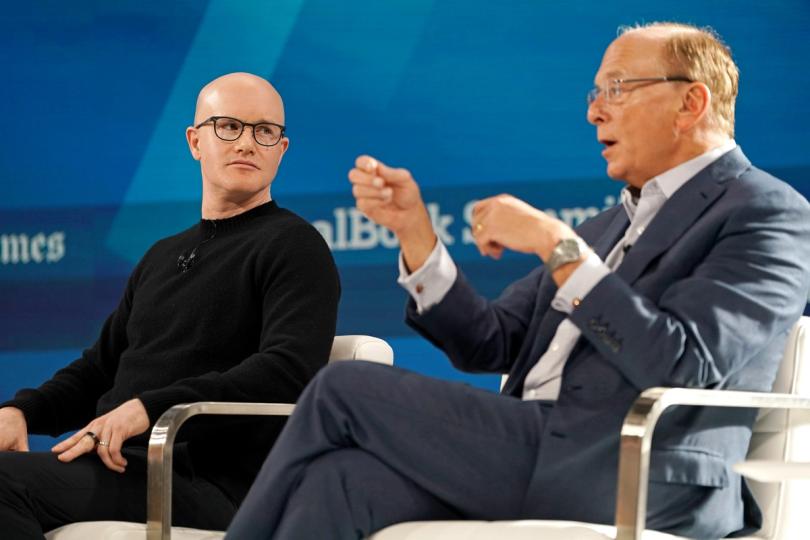
During his recent attendance at the World Economic Forum in Davos, Brian Armstrong, CEO of Coinbase, relayed a significant insight about the evolving stance of traditional banking towards cryptocurrency. He disclosed that a high-ranking official from one of the world’s ten largest banks described crypto as their “number one priority,” framing it as an “existential” issue for the institution.
Armstrong’s remarks, shared through a post on social media platform X, reflect a notable transformation in how established financial institutions are responding to the rising prominence of digital currencies. This shift comes at a time when global regulators are moving towards clearer guidelines for digital assets, amplifying the urgency for traditional banks to integrate cryptocurrency infrastructures into their operations.
While Armstrong did not specify the identity of the bank or the executive involved, he indicated that many financial leaders he interacted with were not merely receptive to the idea of cryptocurrency; they were actively seeking to embrace it as a strategic opportunity. “Most of them are actually very pro crypto and are leaning into it as an opportunity,” he stated.
For banks operating on outdated payment systems, cryptocurrencies present both threats and avenues for growth. With the rise of stablecoins and tokenized assets, there looms the risk of disintermediation—whereby global asset managers or fintech companies could bypass traditional banks entirely, providing direct access to tokenized securities and facilitating instantaneous transactions without the delays associated with conventional banking.
Tokenization was highlighted as one of the pivotal topics at Davos, with discussions transcending stablecoins to encompass equities, credit, and various other financial products. Armstrong pointed out the substantial number of “unbrokered” adults globally—estimated at 4 billion—who lack access to robust investment opportunities. He contended that tokenization could help bridge this gap, predicting significant advancements in the sector for 2026.
Armstrong also noted a perceived strengthening of political support for cryptocurrency in the United States, citing initiatives from the Trump administration aimed at establishing a regulatory framework for digital assets, such as the CLARITY Act. While he refrained from addressing Coinbase’s last-minute withdrawal of support for a key crypto market structure bill—which led to its hearing’s delay—he described the U.S. government as “the most crypto-forward government in the world.” He emphasized that establishing clear regulations is crucial for maintaining the U.S.’s competitive edge, especially as other nations like China invest significantly in stablecoin technology.
Additionally, Armstrong mentioned that artificial intelligence (AI) and cryptocurrency were among the most frequently discussed subjects during the forum. He observed that while the rise of AI might overshadow crypto within capital markets, the two technologies are intricately linked. He expressed the expectation that AI agents would increasingly utilize stablecoins for transactions, thus circumventing standard identity verifications and traditional banking protocols.
The overarching message from Armstrong’s reflections on Davos was clear: cryptocurrency has transitioned from being a marginal experiment to a central concern for some of the world’s leading financial institutions. For these players, engaging with crypto is not just advantageous but, for some, a necessity for survival in a rapidly evolving financial landscape.