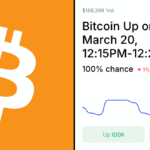
This week witnessed significant developments in prediction markets, highlighted by Coinbase’s new event-contract trading features and the U.S. regulatory landscape evolving to provide clearer guidelines for this growing sector. Coinbase has teamed up with Kalshi to broaden access to prediction markets, enabling users across all 50 states to trade event-based contracts linked to various outcomes in politics, economics, and sports.
Coinbase has now integrated Kalshi-powered prediction markets into its app, allowing users to engage in simple yes-or-no contracts utilizing U.S. dollars or the USDC stablecoin. This initiative marks a pivotal move for Coinbase as it positions itself more firmly in the realm of regulated event contracts after a successful pilot program. Previously, Kalshi also collaborated with Robinhood, allowing its users to trade similar markets directly through the Robinhood app.
Brian Armstrong, CEO of Coinbase, emphasized the significance of this expansion, reflecting the company’s commitment to diversifying its product offerings beyond cryptocurrency. The move follows the launch of the Coinbase Derivatives Exchange in 2022, which allows trading in regulated financial derivatives tied to non-crypto assets such as oil and gold.
In tandem with Coinbase’s initiatives, U.S. regulators have also indicated a reconsideration of their approach to regulating prediction markets. The Commodity Futures Trading Commission (CFTC) plans to withdraw a previously proposed ban on political and sports betting contracts and pivot towards establishing clearer regulatory standards. CFTC Chairman Michael Selig acknowledged the need for updated guidelines, stating that the existing regulatory framework has failed to offer clarity for market participants. This shift comes in response to concerns from critics, including state regulators and consumer advocacy groups, who argue that these contracts resemble gambling and should thus be under state gambling laws.
Amid these regulatory shifts, prediction markets have indicated growing concern over a potential U.S. government shutdown, with traders significantly raising the odds of such an event. Current estimates on platforms like Kalshi and Polymarket show an implied chance of a shutdown as high as 92% and 98%, respectively. This change is notable, especially when comparing it to earlier predictions where the likelihood of a shutdown in 2026 was calculated at just 34%. The increase in shutdown odds coincides with ongoing Congressional disputes surrounding federal funding, particularly for the Department of Homeland Security.
In the realm of political prediction markets, the question of potential nominations for the Federal Reserve chair has also garnered interest. Market odds reflect that Kevin Warsh has a high probability of 99.3% for nomination, while Judie Shelton and Michelle Bowman have significantly lower chances at 0.4% and 0.3%, respectively.
As these developments unfold, the intersection of prediction markets and regulatory scrutiny continues to draw attention, with both market dynamics and legislative decisions shaping the future landscape of this innovative trading sector.