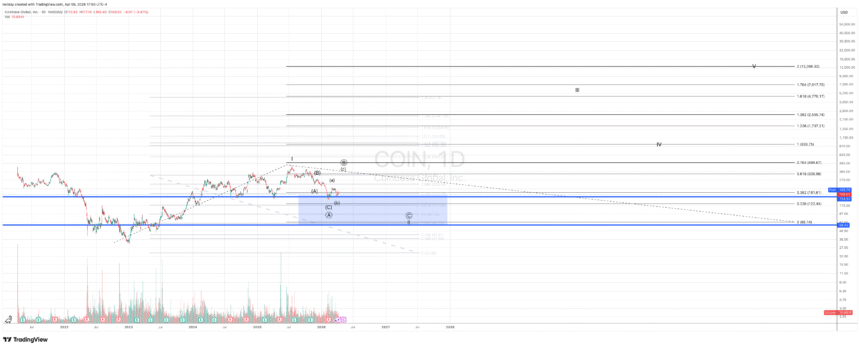
Over the past year, Coinbase’s stock prices (COIN) have seen significant volatility, plunging from highs in the $400s to a low of approximately $139, marking a steep 70% drop. This downward trend has raised concerns among investors, but there remains a belief in COIN’s long-term potential, suggesting that those with patience may find opportunities to acquire shares at lower prices during this bear market.
The analysis highlights that although the bear market could lead to considerable frustration for resilient investors, it also presents a chance to accumulate stocks at a discount. Predictions include the potential for COIN to rise to four-digit prices in the years ahead, provided certain price levels hold steady.
Earlier predictions suggested a potential long-term peak around $400, which was indeed realized at $444 in July 2025; this marked the beginning of a significant retracement. While a bounce was anticipated following February’s lows, it is noted that this bounce might not indicate a long-term recovery yet.
Current assessments cast doubt on whether the lowest point has indeed been reached; while the bullish rally may appear corrective, indicators suggest that a more significant dip remains possible. The price needs to maintain above $160 to consider prospects for an uptick to between $250 and $300; breaking this level could trigger a further decline down to around $115.
For individual trading strategies, adopting risk management is crucial. Traders are urged to keep their positions smaller during this bearish phase and to be cautious, especially if prices begin to fluctuate above the current levels. It’s recommended to limit exposure and wait for clear signals before escalating positions.
A potential upward movement to $250 or above might set the stage for a final bear market decline, with support levels capable of dropping to $59 without undermining long-term forecasts for the stock. The intricacies of corrective patterns complicate trading strategies, as it’s difficult to predict precise movements; often, these structures can be more complex than standard models suggest.
Through all this, the advice remains clear: while the current pricing may appear advantageous, it’s essential to be cautious of market dynamics. Using short-term trades to accumulate and manage core holdings can be a prudent strategy, allowing flexibility and minimizing risk exposure. The emphasis on risk management remains paramount, particularly as the market continues to navigate these challenging conditions.