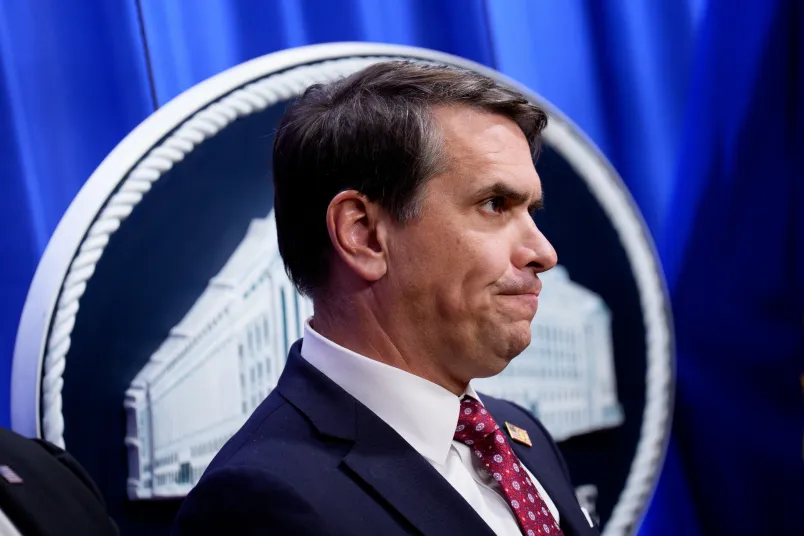
Before Todd Blanche’s confirmation as the second-highest official at the Justice Department, he faced scrutiny from ethics officials due to potential conflicts of interest stemming from his significant cryptocurrency investments, reportedly valued between $159,000 and $485,000. To adhere to federal ethics regulations, Blanche agreed to divest from these digital assets within 90 days post-confirmation, pledging to abstain from any decisions that could impact his financial interests in the cryptocurrency sector until he sold his holdings.
Despite these agreements, Blanche took decisive action shortly after assuming office, issuing a memo that halted investigations into cryptocurrency firms that had been initiated under President Biden. He dismantled a dedicated enforcement team that was focusing on crypto-related fraud and money laundering, and his memo announced cooperation with a working group of experts aligned with Trump, which sought to enhance America’s position in the digital currency landscape.
Legal experts contend that Blanche’s decisions, made while still holding substantial crypto investments, constituted a breach of both the federal conflict of interest law and his ethics agreement. Virginia Canter, a former ethics lawyer across multiple presidential administrations, emphasized the inherent conflict when an official with investments in a sector takes steps that could influence regulatory or prosecutorial approaches.
After ultimately divesting from his crypto assets, records indicate that Blanche transferred them to his adult children and a grandchild—a legal maneuver that, while permissible, raises ethical questions. Critics argue that this tactic undermines the spirit of ethical regulation, illustrating challenges in maintaining integrity in public office.
The Trump administration’s approach to cryptocurrency oversight marks a stark contrast to that of previous administrations. Since taking office, Trump has appointed numerous officials with ties to the crypto industry, collectively managing investments worth substantial amounts. This trend includes Commerce Secretary Howard Lutnick, who divested from his firm by transferring interests to his family. Lutnick has taken actions aligning with pro-crypto initiatives, demonstrating how these officials have influenced policies toward a burgeoning market.
Paul Atkins, chair of the SEC, similarly navigated potential conflicts, having held up to $6 million in crypto assets prior to his confirmation. Since his appointment, the SEC has significantly scaled back enforcement actions against crypto companies.
This favoritism towards the crypto industry has drawn criticism for potentially prioritizing corporate interests over ethical governance. James Thurber, a former congressional staffer, pointed out a departure from ethical norms established by prior administrations, citing the contrast with Jimmy Carter’s blind trust strategy for avoiding conflicts.
In an election campaign that emphasized a pro-crypto agenda, Trump promised to dismantle the regulatory framework that he accused Biden of imposing. This strategy garnered support from the cryptocurrency sector, which invested heavily in Trump’s political ambitions.
Blanche’s memo was indicative of a broader shift within the Justice Department, which dismissed years of rigorous enforcement against financial crime related to cryptocurrencies. This change spurred favorable market reactions, illustrating the interconnectedness of investment decisions and regulatory directions in the evolving landscape of digital assets.
As the Justice Department transitions under Blanche’s leadership, many worry that ethical considerations may continue to be overshadowed by the interests of a growing cryptocurrency market. Legal experts emphasize the necessity for officials to maintain rigorous boundaries to avoid even the appearance of impropriety that could lead to public distrust in government institutions.