Calls for investigations into Polymarket, a prediction market platform, are rising within Congress following instances of anonymous traders making strategic bets on significant geopolitical events shortly before they occurred. Recent reports indicate that just hours before President Trump announced a ceasefire between the U.S. and Iran, nearly 50 new accounts on Polymarket placed hefty wagers on the same outcome. These trades, noted for their timing, were the sole activities recorded by those accounts.
This trend is not isolated. In January, an anonymous user profited $400,000 by betting on the ousting of Venezuelan President Nicolas Maduro shortly before his capture. Additionally, during the lead-up to the Iran conflict, another account netted approximately $550,000 based on predictions regarding U.S. military action against Iran.
Such instances have sparked concerns over potential insider trading. A report from Harvard researchers suggested that nearly $143 million in profits were made on Polymarket by users who may have had advance knowledge of various events, including personal milestones and major award announcements.
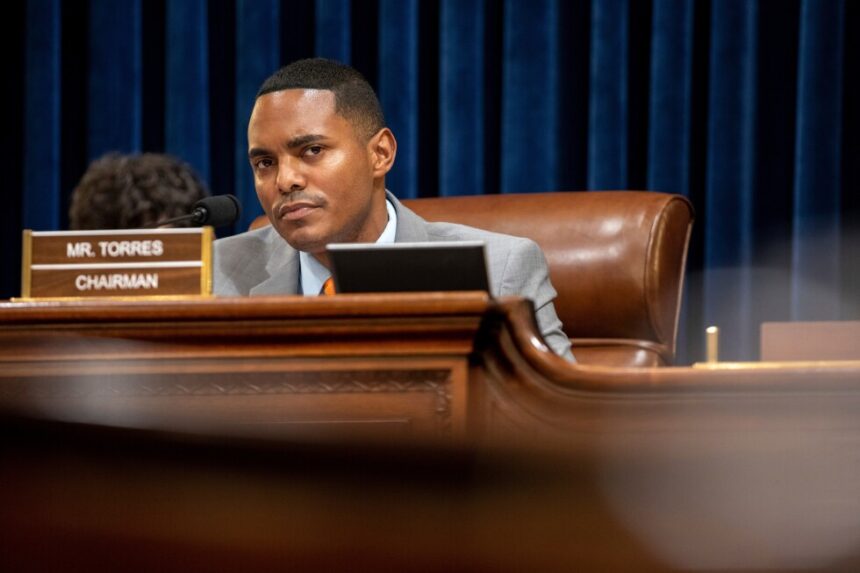
Representative Ritchie Torres of New York, a member of the House Financial Services Committee, has formally requested the Commodity Futures Trading Commission (CFTC) to investigate the suspicious trades. The CFTC oversees derivatives markets, which encompass prediction markets like Polymarket.
In a letter to the CFTC, Torres highlighted serious concerns regarding possible access to nonpublic information by certain traders. He posed a rhetorical question about the probability of winning bets being placed mere minutes before impactful announcements, suggesting that such occurrences point toward insider trading rather than random chance.
Polymarket allows users to wager on diverse topics, ranging from weather forecasts to economic indicators. However, U.S. residents have faced restrictions since the platform was banned in the U.S. in 2022. Currently, the company is working to reestablish a legal presence in the U.S. by acquiring a CFTC-licensed exchange, enabling them to resume limited operations domestically.
Additionally, Polymarket has a separate offshore crypto-based platform that operates outside U.S. jurisdiction, which constitutes the majority of its activity. Senator Richard Blumenthal from Connecticut has questioned Polymarket’s practices regarding trades on issues of war and violence. He expressed concerns that the platform may serve as a conduit for foreign intelligence agencies to exploit sensitive national security information.
Calls for regulatory oversight are not solely coming from Democrats; Republicans are also voicing their concerns. Legislators have proposed bipartisan bills aimed at banning bets on certain events, with Representative Blake Moore from Utah emphasizing the potential dangers of adversaries using such markets to gauge U.S. strategies.
As both Polymarket and Kalshi seek to capture a share of the lucrative U.S. betting market, the political implications of these developments are significant. Kalshi, which is already operating under U.S. regulations, aims to position itself as a leading prediction market. The competition is further complicated by the involvement of high-profile investors, including Donald Trump Jr., who has vested interests in both platforms.
The stakes are high as Polymarket navigates regulatory challenges while simultaneously attempting to expand its reach amid growing scrutiny.