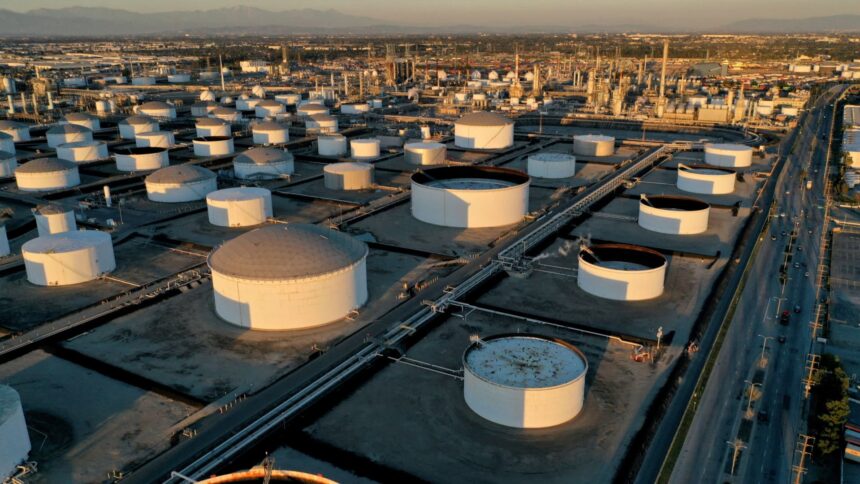
Crude oil prices surged past $80 per barrel on Thursday, marking a significant increase as the ongoing conflict in Iran continues to disrupt global fuel supplies. The situation has escalated as Iran’s Foreign Minister, Abbas Araghchi, stated that the country is not seeking a ceasefire with the United States and Israel. Meanwhile, President Donald Trump indicated that after the conclusion of U.S. military operations in Iran, his administration would pivot its focus toward issues concerning Cuba.
The turmoil in the Middle East has not only affected energy markets but has also had a detrimental impact on Dubai’s reputation as a global wealth hub. Wealthy individuals are reportedly fleeing the region in light of security concerns, as civilian and tourist areas—including the luxurious Fairmont The Palm Hotel and Dubai airport—have been targeted by projectiles during the ongoing unrest.
In the United States, tensions are brewing in the tech sector as the rivalry between Anthropic and OpenAI escalates. OpenAI CEO Sam Altman criticized Anthropic during a recent statement, arguing that abandoning commitment to democratic processes in response to leaders’ unpopularity is detrimental to society. This statement follows a clash between the Department of Defense and Anthropic over the use of AI models in military applications.
Adding to the uncertainty in the markets, former President Trump’s import tariffs are facing renewed legal challenges. New York Attorney General Letitia James, alongside the attorneys general from 23 other states, has launched a lawsuit aimed at blocking Trump’s global tariff regime, just days after a critical Supreme Court decision invalidated his previous tariff strategy.
In a related development, the Iranian Shahed-136 drone has emerged as a key player in Tehran’s retaliatory strategy against the U.S. and its allies. Described as “the poor man’s cruise missile,” the Shahed-136 has been employed extensively by Iran and its ally Russia in regional conflicts, including the ongoing struggle in Ukraine. Despite appearances, the drone’s capabilities have made it a notable asset in asymmetric warfare, inflicting damage and imposing costs despite many of them being intercepted.
Analysts suggest that systems like the Shahed-136 enable countries such as Russia and Iran to utilize cost-effective methods for inflicting substantial challenges on their adversaries, thus reshaping military strategies in the modern era.