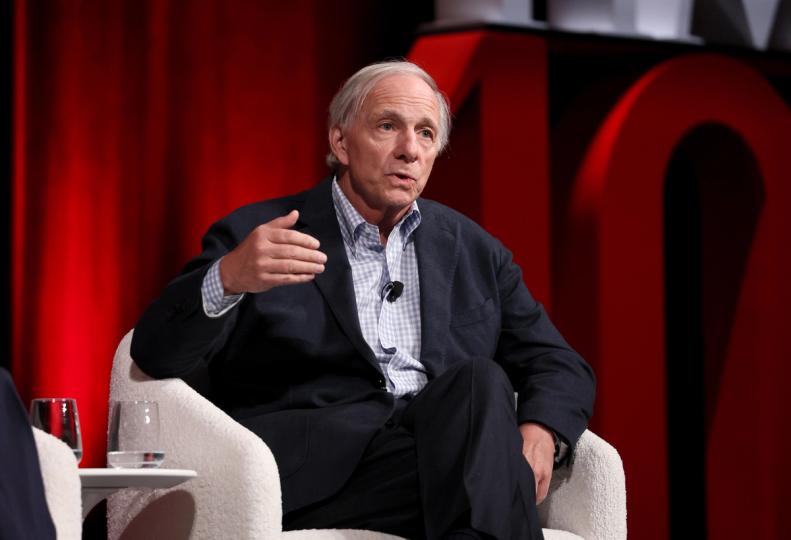
Recent comments from billionaire hedge fund manager Ray Dalio have reignited debates about the viability of bitcoin (BTC), with the founder of Bridgewater Associates asserting that the cryptocurrency lacks key attributes that make gold a reliable store of value. Speaking on the All-In Podcast, Dalio compared bitcoin unfavorably to gold, citing its lack of backing from central banks, limited privacy features, and potential existential threats posed by advancements in quantum computing.
Dalio’s skepticism is not new; last year, he mentioned having only a 1% allocation to bitcoin. He stated that bitcoin’s traceability poses challenges for it to become a global reserve asset and warned of vulnerabilities from emerging technologies like quantum computing. He also highlighted the transparent nature of bitcoin’s public ledger, suggesting that transactions could be monitored and controlled.
In response, crypto experts and industry analysts argue that such critiques reflect longstanding discussions surrounding bitcoin’s legitimacy and risks. They contend that the issues Dalio highlighted are already factored into bitcoin’s much smaller market capitalization, which currently stands at approximately $1.4 trillion, compared to gold’s estimated $35 trillion market cap.
Matt Hougan, the chief investment officer at asset manager Bitwise, acknowledged Dalio’s concerns but suggested they also represent investment opportunities. He noted that bitcoin’s lower market value compared to gold is indicative of its potential growth as developers work to address the risks Dalio mentioned. “If these critiques did not exist, bitcoin would already be at $1 million a coin,” Hougan added.
Alex Thorn, head of research at Galaxy Digital, characterized Dalio’s arguments as outdated. He stated that criticisms surrounding quantum risks are being actively addressed by developers within the ecosystem. Thorn emphasized that while comparing bitcoin to gold is valid, it overlooks bitcoin’s unique capabilities, including its growing adoption by individuals and institutions over the past two decades.
Matthew Sigel, the head of digital assets research at VanEck, highlighted that both gold and bitcoin serve as hard assets from distinct monetary eras. He described the debate as one between the old monetary architecture of the past century and the evolving structure of the current one. Sigel noted that while gold historically addressed trust issues in an analog financial system, bitcoin provides transparency and security in a digital environment.
Moreover, he pointed out that some central banks, like the Czech National Bank, are beginning to explore exposure to digital assets and that advancements in privacy, such as improved wallet practices and second-layer solutions, are in development. Sigel also dismissed the idea that quantum computing poses a unique risk to bitcoin, arguing that it presents a challenge to the entire financial system, highlighting the need for broader solutions.
Investor surveys indicate a generational shift, with younger investors increasingly favoring bitcoin, suggesting a gradual transformation in monetary preferences as the crypto landscape continues to evolve.