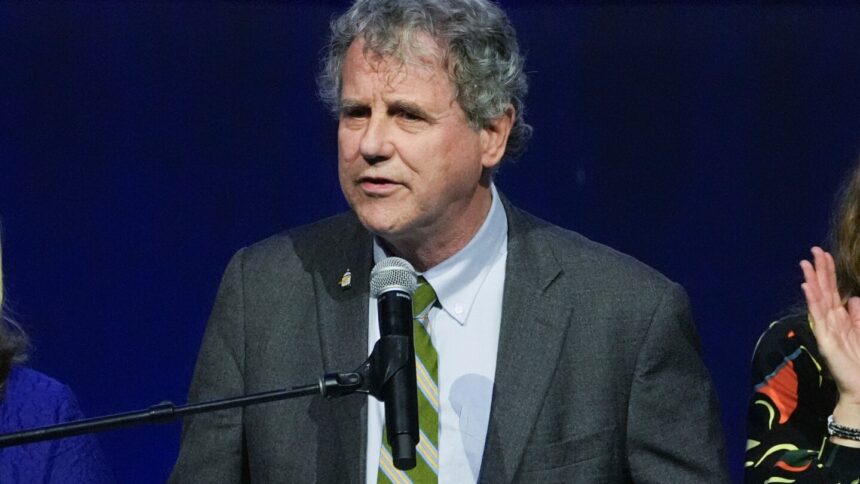
At a luxurious five-star resort in Jackson Hole, Wyoming, the cryptocurrency industry gathered to celebrate a remarkable legislative turnaround on Capitol Hill. With several key priorities advancing through Congress with surprising momentum, Senator Tim Scott, Chairman of the Senate Banking Committee, attributed the industry’s newfound success to a significant political shift. During an August panel discussion, Scott expressed gratitude for the defeat of long-time critic Sherrod Brown, the former Ohio Democrat who lost his Senate seat to Republican Bernie Moreno in 2024. Scott’s comments elicited laughter and applause as he highlighted the industry’s substantial financial investment in Moreno’s campaign, underscoring the message that opposing crypto interests could have serious political repercussions.
In a striking contrast to the previous administration, which displayed skepticism toward the cryptocurrency sector, recent months have seen Congress move rapidly to align with crypto interests. Significant legislation has already been passed, introducing new regulations and consumer protections for stablecoins, which are cryptocurrencies pegged to the U.S. dollar to curb volatility. Now, momentum is building around a broader regulatory framework aimed at clarifying the status of digital assets.
With Donald Trump’s endorsement of the cryptocurrency industry, calling for the U.S. to become the “crypto capital of the world,” there is a palpable shift in political favor. Trump’s family has also financially benefited from the crypto surge, holding stakes in ventures like World Liberty Financial, which recently launched its own stablecoin.
Supporters of the legislative changes argue that these new policies will enhance oversight and protect consumers, thereby legitimizing a sector that has faced numerous scandals, including the high-profile collapse of FTX and the conviction of its founder, Sam Bankman-Fried. In contrast, Brown has remained a staunch critic, fearing that the rise of digital assets facilitates money laundering and hinders consumer protections.
As Brown mounts a comeback campaign for a fourth term, he faces a dramatically changed landscape. Despite losing to Moreno by just over 3.5 percentage points amid heavy industry spending, he remains defiant, stating that cryptocurrency must expand opportunities while protecting consumers. Political analysts note that the cryptocurrency industry’s unprecedented spending—over $130 million on congressional races in 2024—has reshaped the political narrative surrounding digital assets, firmly positioning crypto as a powerful political force.
Brown’s Republican challenger, Jon Husted, a pro-crypto ally, has already backed legislation to regulate stablecoins, signaling further challenges ahead for the former senator. Millions in campaign dollars are being amassed by pro-crypto political action committees, many closely aligned with Trump and congressional conservatives. Fairshake, a super PAC heavily funded by crypto firms including Coinbase, reported significant cash reserves intended to support pro-crypto candidates across the nation.
Amidst a backdrop of shifting voter sentiment, crypto advocates are increasingly confident in their influence, believing that a growing number of Americans are interested in favorable cryptocurrency regulations. However, public opinion remains mixed, with a Pew Research Center poll indicating that 55% of U.S. adults view cryptocurrencies as “very risky” investments.
Despite the diverse responses to digital assets, younger demographics, particularly men under 50, display significant investment interest. As the industry continues to integrate into the political and financial mainstream, the combination of substantial financial backing and shifting voter perceptions underscores a pivotal transformation in the narrative surrounding cryptocurrency in America.