The cryptocurrency market experienced a significant upheaval, marking one of its most challenging days to date. On October 10, a staggering 1.6 million traders faced a collective loss of $19.37 billion due to a massive liquidation event, the largest recorded by CoinGlass, a firm specializing in crypto data analytics. This event overshadowed an otherwise prosperous year for digital assets, during which both Bitcoin and Ethereum reached all-time highs.
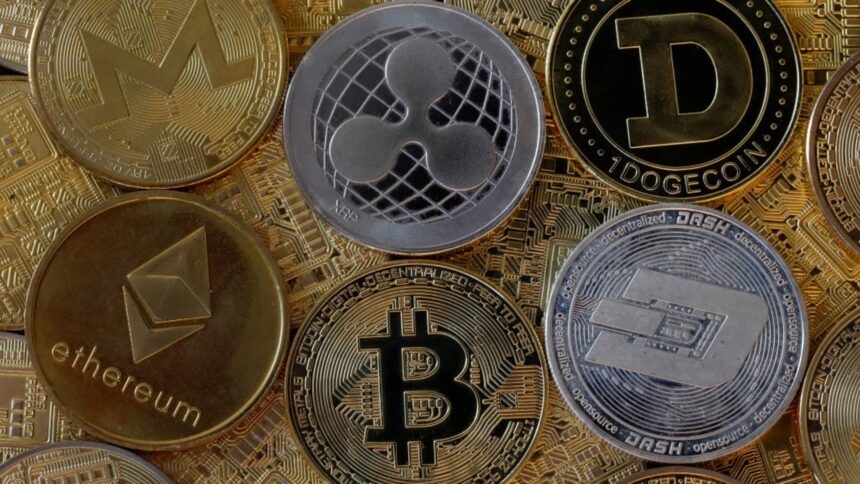
In the aftermath, while Bitcoin and Ethereum traders appear to have mostly recuperated, many holders of smaller altcoins are still grappling with substantial losses. Bitcoin is trading approximately 11% below its peak on October 10, with current values above the critical $100,000 resistance level. Meanwhile, Ethereum is hovering near the crucial $4,000 mark. In contrast, lesser-known tokens like XRP, Solana, Dogecoin, and BNB have seen declines ranging from 15% to 24% since the liquidation crisis.
Experts attribute the relative resilience of Bitcoin and Ethereum to their stature as the most established and liquid cryptocurrencies. Frank Chaparro, head of content and special projects at GSR, indicated that these major players have the backing of exchange-traded funds (ETFs) and structured products, making them less susceptible to the volatile swings that affect smaller cryptocurrencies. He pointed out that during the liquidation event, mid-cap and small-cap tokens suffered losses between 60% and 80%, while Bitcoin and Ethereum experienced drops of merely 11% and 13%.
The surge of leveraged trading has historically been a significant component of the crypto landscape, attracting speculative investors. Tom Lee, head of research at Fundstrat Global Advisors, emphasized the inherent volatility and risks associated with leverage, particularly as smaller altcoins tend to be more vulnerable. The concept of leverage involves borrowing funds to amplify one’s trading exposure, which can lead to forced liquidations when market conditions turn unfavorable.
The sell-off was notably triggered by a geopolitical announcement from U.S. President Donald Trump regarding potential tariffs on China. The immediate consequences included a domino effect of liquidations, where the selling pressure further weakened market prices, leading to a vicious cycle of additional liquidations and price drops. Chaparro depicted this phenomenon as a “doom loop,” where a price decrease set off a chain reaction, further exacerbating the situation.
As traders continue to explore more ways to engage with the crypto market, the landscape is witnessing the emergence of new trading products that provide increased leverage. While U.S.-approved Bitcoin and Ethereum ETFs have entered the market, offshore exchanges have started offering extreme leverage options, such as 1,001x on certain tokens. Such products are enticing for their potential high returns but are accompanied by notable risks.
Chaparro remarked on the fragility of the current trading infrastructure in the crypto sphere, highlighting the imbalance between a 24/7 market and more traditional trading mechanisms. This disparity contributes to the lack of safeguards, such as circuit breakers, which are commonplace in conventional markets.
Looking ahead, crypto researcher Molly White warned that the October liquidation event might serve as a precursor to future market volatility, particularly as crypto becomes more intertwined with traditional finance. She noted that sudden shocks can quickly unravel market confidence. Juan Leon, a senior investment strategist at Bitwise, suggested that while upcoming corrections could be anticipated, the influx of institutional capital into the crypto space may help stabilizing factors, as larger players typically avoid high-leverage positions and favor long-term holding strategies.
The recent turbulence in the cryptocurrency market underscores the ongoing challenges faced by traders, especially in a landscape characterized by rapid fluctuations and ever-present risks. As the market continues to evolve, both seasoned investors and newcomers alike remain alert to the potential for significant shifts in the near future.