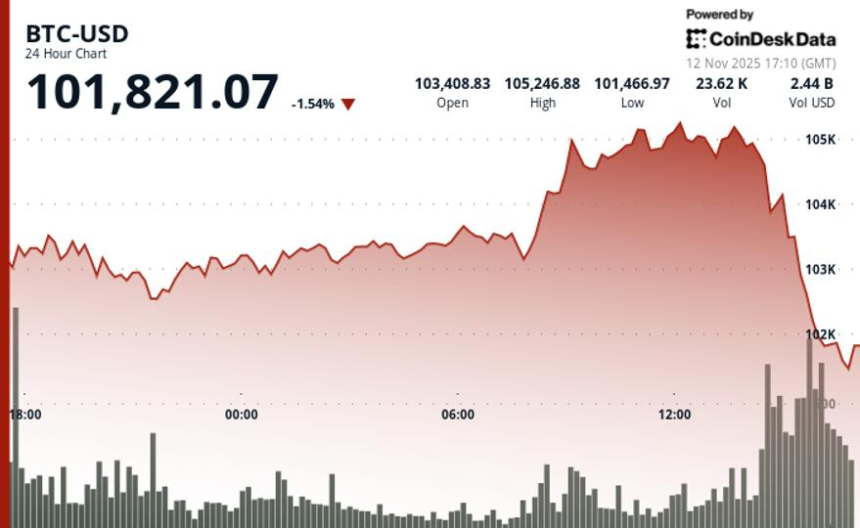
Overnight gains in the cryptocurrency market dissipated as the U.S. morning hours commenced, resulting in bitcoin falling back below the $102,000 mark. After reaching a high of over $105,000 earlier in the day, bitcoin experienced a swift decline of roughly 3% within just a few hours as traditional U.S. markets opened. The sell-off wasn’t limited to bitcoin alone; ether also faced significant losses, dropping nearly 5% to fall below $3,400. Other major altcoins, including Solana and XRP, mirrored this downward trend.
U.S.-based crypto-related stocks also suffered in the early trading session. Circle, the issuer of the USDC stablecoin, reported a 9.5% drop following its third-quarter earnings announcement. Additionally, several crypto mining companies, such as Bitfarms, Bitdeer, and Cipher Mining, experienced losses ranging from 5% to 10%.
A distinct lack of enthusiasm among U.S. investors has characterized the crypto markets in recent weeks, exemplified by the Coinbase Premium metric, which measures demand for bitcoin among U.S. customers. This measure has registered a negative trend since late October, indicating a weaker appetite for crypto investments in the U.S. The Coinbase Premium Index now faces its longest negative streak since the market correction in April when bitcoin saw a decline from above $100,000 to as low as $75,000.
This shift in market sentiment coincides with increasing uncertainty surrounding the Federal Reserve’s monetary policy following its October meeting. What was once perceived as a straightforward path to a rate cut in December has become a matter of contention among policymakers. A recent report highlighted a division within the Fed, with officials grappling over whether the primary concern should be persistent inflation or a slowing labor market. The recent government shutdown, which halted essential employment and inflation data releases, has added to this uncertainty, forcing reliance on private data and anecdotal evidence.
As a result, predictions of a December rate cut are now merely a “toss-up,” according to the report. Even if a decision to lower rates is made, experts suggest there may be a higher threshold for any future reductions. This ambiguity has led to more than $1.8 billion in net outflows from U.S.-listed spot bitcoin ETFs since the Fed’s October meeting, pointing to the ongoing uncertainty and lack of positive catalysts that keep bitcoin trading in a precarious position.