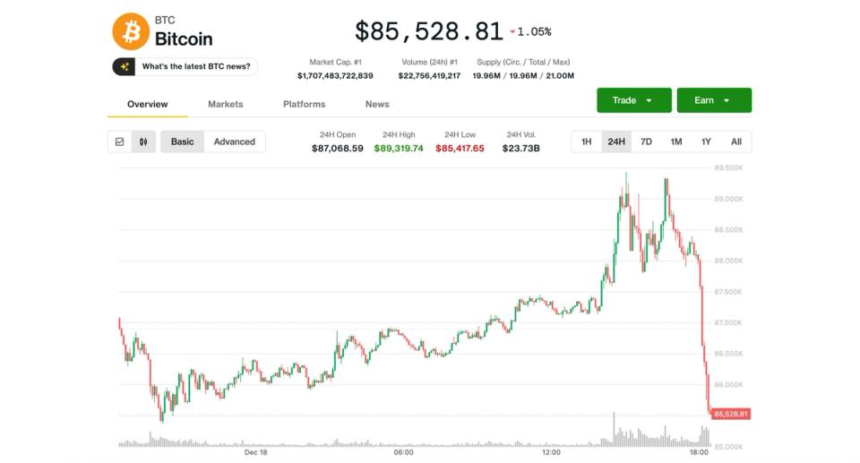
In a striking continuation of a tumultuous market trend, cryptocurrency markets saw considerable volatility on Thursday, leaving investors both surprised and disappointed. Following an initial surge, leading cryptocurrencies quickly reversed their gains within hours, although the timeframe for these fluctuations extended longer than previous day’s abrupt changes.
Bitcoin, the leading cryptocurrency, noted an initial peak at $89,300 but plummeted to $85,500, ultimately trading at around $86,000 by the end of the day. This decrease marked a decline of 0.8% over the past 24 hours. Despite this, the tech-centric Nasdaq index experienced a more favorable day, climbing 1.7% after retracting from session highs of approximately 2%.
The early gains in the cryptocurrency market were attributed to a surprisingly low U.S. Consumer Price Index report for November, which saw headline inflation decrease to 2.7%, down from 3% previously. This data led some analysts to anticipate a potential cut to interest rates by the Federal Reserve in January, a move that could positively influence risk-related assets, including cryptocurrencies.
However, skepticism emerged regarding the inflation figures, with some economists critiquing the methodology behind the report. Notably, economist Omair Sharif emphasized concerns over the Bureau of Labor Statistics (BLS) having effectively “zeroed out” rent and owner’s equivalent rent figures for October, which, according to him, would skew year-over-year CPI calculations until April. Adding to the criticism, the Wall Street Journal’s Nick Timiraos described the approach as “inexcusable,” indicating that such a methodology was not defensible.
As the market responded to these mixed signals, sentiment reflected a cautionary stance. Odds of a rate cut in January remained unchanged at a modest 24%, underscoring prevailing skepticism among traders.
In the crypto options market, a distinct divide in sentiment was noted between Bitcoin and Ether. Data from market maker Wintermute revealed that Bitcoin options indicate a range-bound outlook, as traders sold downside protection below $85,000 and capped upside exposure above $100,000. This activity suggests a belief in strong support levels while maintaining limited expectations for a breakout in the short term.
Conversely, Ether options exhibited more hedging behavior, with traders appearing less confident in strong upside movement. Support levels are reportedly forming around the $2,700 to $2,800 range. However, aggressive selling of upside options above $3,100 indicates that many traders are prioritizing protective measures over optimistic expectations.
As the market continues to navigate this period of uncertainty and fluctuating data, participants remain cautiously observant, weighing economic indicators against their investment strategies.