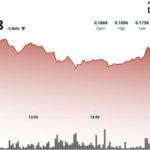
Bitcoin remained steady around $108,000, reflecting a cautious approach from traders ahead of the upcoming U.S. employment report, while Ethereum dipped to approximately $3,750. This downward movement coincided with recent comments from Treasury Secretary Scott Bessent, who indicated that high interest rates have begun to strain parts of the economy, igniting discussions on the potential implications for monetary policy.
Data from CoinGecko showed Bitcoin’s value slipped by roughly 1.7% over the last 24 hours, while Ethereum experienced a more pronounced decline of about 3.5%. The overall crypto market saw major tokens softening, with altcoins particularly underperforming in what appears to be a defensive stance from investors amidst economic uncertainty.
In a recent CNN interview, Bessent pointed out that the Federal Reserve’s restrictive interest rates may have pushed sectors like housing into recession. He suggested that there is an opportunity for the central bank to consider rate cuts to alleviate pressure on the economy. However, he also cautioned that maintaining high borrowing costs could deepen economic challenges for already leveraged households.
Initially, the crypto market reacted positively to Bessent’s comments, as they hinted at potential easing of monetary policy. However, enthusiasm waned as traders reassessed the likelihood of cuts leading to increased volatility rather than a straightforward influx of liquidity.
Bitcoin’s dominance in the market has remained stable, indicating a limited appetite for smaller tokens amid the current climate. As U.S. markets prepare to reopen, attention is drawn to the employment report expected on Friday at 8:30 a.m. ET. Analysts predict a slowdown in hiring while unemployment rates are likely to hold steady, providing vital insight into whether any potential rate cuts will be viewed as a sign of economic confidence or as a response to growing vulnerabilities.
On-chain metrics further highlight a loss of momentum for Bitcoin, which continues to hover below a critical cost basis of nearly $113,000. Many analysts consider this level a critical threshold that separates bullish market conditions from corrective phases. The price has been constrained below this key level for the past three weeks after spending six months above it, suggesting dwindling demand at current prices, as reported by Glassnode.
A sustained downturn could signal a deeper correction, with analysts identifying the next significant support level at approximately $88,000. This figure corresponds to the realized cost basis of the actively circulating supply, a historical marker for corrective phases within various market cycles.