As winter settles in across the United States, many Americans are faced with rising electricity bills and an increasing need for effective heating solutions. While traditional methods such as home heating oil, natural gas, and electric furnaces remain common, a novel approach involving cryptocurrency mining is garnering interest. Proponents of this idea suggest that the use of heat generated by crypto mining could eventually become a mainstream heating source for homes and buildings, particularly during colder months.
Fundamentally, the intensive computational processes involved in cryptocurrency mining produce substantial heat, much of which is typically discarded. According to data from digital assets brokerage K33, the bitcoin mining sector generates approximately 100 terawatt-hours of heat annually, which is enough to warm the entire country of Finland. This substantial energy byproduct has inspired innovators to explore ways to repurpose the heat for residential, commercial, and industrial use.
One example is HeatTrio, a $900 space heater that also functions as a bitcoin mining rig. Some individuals have taken to using the heat produced by their own mining setups to warm their homes. Jill Ford, CEO of Bitford Digital, noted that she has encountered bitcoin rigs in attics, with the generated heat redirected through the household’s ventilation system to help counteract heating costs. “It’s a clever use of what would otherwise be wasted energy,” she remarked, emphasizing the potential for crypto miners to act as “energy allies” with creative applications of their technology.
The financial viability of this approach largely varies based on regional electricity costs and mining efficiency. Ford pointed out that using a mining rig could be a cost-effective method of heating a home, as the dual function negates some electricity expenses. For those with access to a mining pool, the ability to share computational power can lead to more predictable income from mining activities.
However, not everyone is convinced of the practicality of using cryptocurrency mining for home heating. Derek Mohr, a clinical associate professor at the University of Rochester Simon School of Business, maintains skepticism regarding the effectiveness of this concept. He argues that modern bitcoin mining is highly specialized, making home setups ineffective. Mohr points out that while mining generates heat, claiming any financial benefit requires using personal electricity, which defeats efficiency considerations.
Despite the skepticism, some experts see promise in the wider adoption of plug-and-play mining rigs, suggesting that as technology evolves, more locations might find this dual-use economically and environmentally advantageous. Nikki Morris, executive director of the Texas Christian University Ralph Lowe Energy Institute, highlighted the potential of harnessing excess heat from crypto mining for various practical applications like heating water or powering heating systems. Morris described this intersection of digital and physical energy systems as worth exploring further.
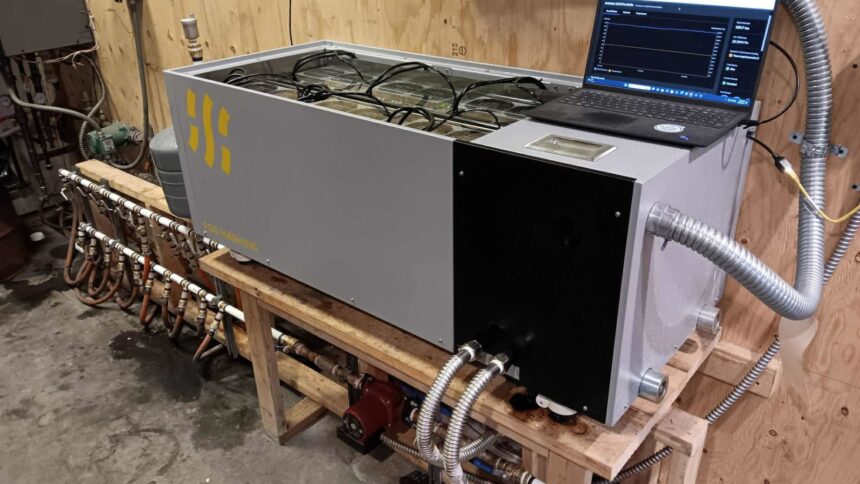
In Challis, Idaho, Cade Peterson’s company, Softwarm, is already testing this innovative approach to heating. Businesses in the town are implementing Softwarm’s rigs to mine bitcoin while simultaneously providing heat. For instance, the owner of TC Car, Truck, and RV Wash reported a significant reduction in heating costs, with mining rigs generating more revenue than the cost of operation. Peterson, who has heated his home using bitcoin mining for two-and-a-half years, envisions a future where such technology is commonplace in home appliances.
As the conversation around cryptocurrency and energy use grows, many questions remain unanswered—covering efficiency, integration with other energy sources, and overall environmental impact. However, the potential convergence of digital asset production and physical energy systems could evolve into a trustworthy alternative for many, showcasing the possibilities presented by this unique heating method.