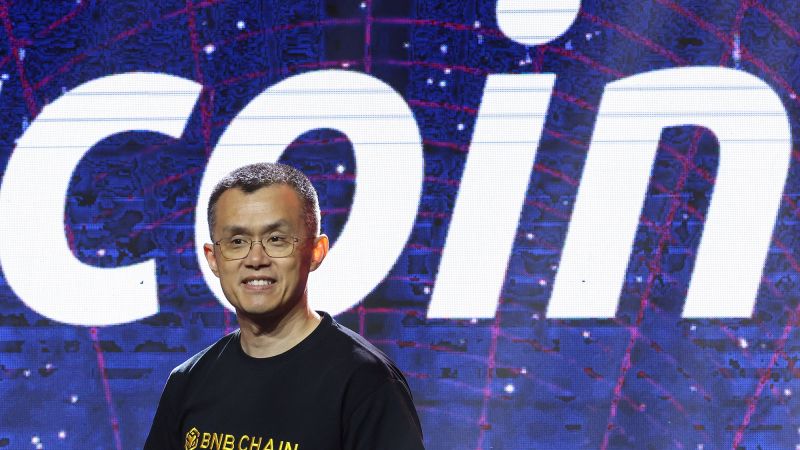
Changpeng Zhao, widely known as “CZ,” is once again attracting significant attention in the cryptocurrency sector following a pardon granted by President Donald Trump. This has reignited discussions around the influence of wealth on legal reprieves, particularly in the context of Trump’s administration.
Zhao, who founded Binance in 2017, has played a pivotal role in shaping the cryptocurrency landscape, transforming it into the world’s largest trading platform for digital assets. Binance allows users to facilitate cryptocurrency transactions globally, taking a modest fee from each trade. The platform also provides advanced financial services, including margin trading and staking, enabling investors to earn passive returns on their holdings.
As the largest cryptocurrency exchange worldwide, Binance boasts a staggering user base of 280 million and handles daily trading volumes exceeding $217 billion. This dominance translates to approximately 40% of the market share among centralized exchanges. However, the platform has faced scrutiny for its compliance with regulations across various jurisdictions. The U.S. effectively banned Binance’s global version in 2019, leading to the launch of Binance.US. Despite this, reports indicate that many users in the U.S. found ways to bypass the restrictions.
U.S. federal prosecutors have highlighted concerns that Binance has inadvertently facilitated illicit activities, including child sex abuse, narcotics trafficking, and money laundering, due to inadequate regulatory protocols. Internal communications even revealed employees questioning the laxity of the platform in tackling such issues. As a result, Binance and Zhao pleaded guilty to money-laundering violations, leading to Zhao stepping down as CEO, paying a $50 million fine, and serving a four-month federal prison sentence. Despite this, his estimated net worth remains above $80 billion, attributed to his substantial ownership stake in Binance.
Zhao still wields considerable influence and maintains connections in the industry. Reflecting on his recent challenges, he remarked that while his official record may have been momentarily tainted, his reputation within the business community remained intact.
Valued at around $3.5 trillion, the crypto industry has gained traction in recent years, increasingly entwining itself with traditional finance. Notable developments include the launch of Bitcoin ETFs and legislative changes designed to facilitate wider adoption. Nevertheless, a significant portion of the American populace, approximately 63%, remains skeptical about cryptocurrencies as a reliable investment.
In the political arena, the cryptocurrency sector has emerged as a major donor in the 2024 elections, with Trump supportive of the industry’s goals. The former president’s enthusiastic embrace of crypto, alongside controversial moves such as launching his own memecoin and proposing a national bitcoin reserve, has raised ethical questions, particularly regarding financial conflicts of interest.
The pardon of Zhao is emblematic of these concerns, especially since Binance has financial ties to Trump family’s ventures. Earlier this year, the Trump family’s World Liberty Financial introduced a dollar-pegged stablecoin, USD1, with Binance contributing to the underlying technology. This stablecoin has garnered attention as it enables significant financial transactions, including a potential $2 billion investment in Binance, benefiting both the Trump family and associated investors.
As the cryptocurrency landscape continues evolving, Zhao’s pardon and Binance’s entanglements with the Trump family underscore the intricate interplay between politics, finance, and regulation, raising questions about the future trajectory of the industry.